About the Author
Pen vs Sword is an independent magazine publishing long-form cultural criticism, art history and political analysis. We write about artists, movements, thinkers and ideas - from Peter Kennard to Hurufiyya, from the Suffragette movement to the French Revolution. Free to read, independently published.
How do ideas organise themselves into Art movements?
Art does not emerge from a vacuum. Behind every painting, sculpture, photograph or performance is a set of ideas – about power, beauty, the body, the city, the state of the world – and those ideas have a history. Art movements are the way those ideas organise themselves across time, drawing artists together under shared philosophies, shared frustrations with what came before, and shared visions of what might come next.
This guide traces the arc of visual art from the mid-nineteenth century to the present day – not as a neat linear progression, but as a living, contested, sometimes contradictory conversation between artists, institutions, politics and streets. It spans Europe, the Americas, Japan, the Arab world and Africa, and it refuses to treat the Western canon as the only story worth telling.
Understanding art movements is not an academic exercise. It is a way of seeing how culture responds to power – and how, over and again, artists have used image, form and material to say what politics cannot, or will not, say. At Pen vs Sword, this question sits at the heart of everything we do: how art and power intersect, how culture challenges authority, and what it means to make things in a world that would sometimes prefer you didn’t.
For more cultural criticism examining how Art & Power intersect through visual culture, representation and ideology, explore related Pen vs Sword articles.
“Art is not what you see, but what you make others see.”
Edgar Degas
All of our content is free to access. An independent magazine nonetheless requires investment, so if you take value from this article or any others, please consider sharing, subscribing to our mailing list or donating if you can. Your support is always gratefully received and will never be forgotten. To buy us a metaphorical coffee or two, please click this link.
Table of Contents
From Page to Object
This article inspired something physical. View in the Propaganda Department.
Vive La Résistance Print | Revolution Print | Rose Diagrams T-shirt | Peter Kennard Collection
What is an art movement and how do they form?
An art movement is a tendency in art with a common philosophy or goal, practised by a group of artists during a specific period. Some movements begin as manifestos – formal declarations of intent, like the Surrealist Manifesto of 1924 or the Bauhaus Manifesto of 1919. Others coalesce more organically, named retrospectively by critics observing a pattern they had not set out to create.
What all movements share is context. The Impressionists were responding to rigid academic painting and the bureaucracy of the Paris Salon. The Dada artists were responding to the catastrophe of the First World War and the bankruptcy of the Enlightenment rationalism that produced it. The Black Arts Movement emerged from civil rights struggle in the United States. Art movements do not happen in the studio alone – they happen in the street, the courtroom, the colony, the aftermath of war.
To study art movements is to study the moments when human beings decided that the way things were being shown to them was no longer good enough – and made something new instead. That is what makes them worth understanding: not just aesthetically, but politically.
Impressionism and the Post-Impressionists – breaking the academic mould
The Impressionists – Monet, Renoir, Degas, Pissarro, Morisot – are so familiar today that it takes an effort to remember how scandalous they once were. When they first exhibited together in 1874, critics were contemptuous. The name “Impressionism” was invented as an insult, mocking Monet’s hazy Impression, Sunrise. The public laughed. The artists kept working.
What the Impressionists were doing was deceptively radical: rejecting the smooth, finished surfaces and historical subjects of academic painting in favour of immediate sensation. They painted outdoors. They captured light as it actually behaved – shifting, impermanent, contingent. They refused to make things look more stable or permanent than they really were.
The Post-Impressionists – Cezanne, Van Gogh, Gauguin, Seurat – took this further. Cezanne pushed toward pure form, building landscapes from geometric planes that would prove foundational to Cubism. Van Gogh channelled raw emotion through swirling, passionate brushwork. Seurat developed Pointillism: painting in tiny dots of pure colour that the eye blends from a distance. These were thinkers – and the thinking they did would power the entire revolution of modernism that followed.
“I paint my own reality. The only thing I know is that I paint because I need to.”
Frida Kahlo
From Cubism to Dada – the modernist rupture after the Great War
Pablo Picasso and Georges Braque developed Cubism in Paris between 1907 and 1914, shattering the idea that a painting should represent a single viewpoint. In a Cubist work, multiple perspectives appear simultaneously – an object seen from front, side and above at once, fragmented and reassembled on the surface. It was the first truly modern way of seeing.
Then came the war. The mechanised slaughter of 1914-1918 destroyed any remaining faith in European civilisation’s claims about progress, reason and beauty. The artists who survived responded with Dada: a deliberate assault on sense itself. In Zurich’s Cabaret Voltaire, in Berlin, in New York, Dada artists made nonsense, noise and scandal their weapons. Marcel Duchamp exhibited a urinal and called it Fountain. The message was unambiguous: if civilisation had produced the trenches, then civilisation’s art was worthless.
The Surrealists, emerging in the mid-1920s under Andre Breton’s fierce direction, inherited Dada’s iconoclasm but added psychoanalysis. For Salvador Dali, Rene Magritte and Frida Kahlo, Surrealism was both an aesthetic programme and a form of liberation – a refusal of the tyranny of conventional, bourgeois, rational reality. Read our full explorations of Dada and Surrealism for the complete stories.
“The ultimate aim of all artistic activity is building.”
Walter Gropius
The Bauhaus and De Stijl – art that serves the world
Emerging from the ruins of Germany in 1919, the Bauhaus had an ambition that went far beyond making beautiful objects. Its founder, Walter Gropius, wanted to destroy the false hierarchy between fine art and craft – to insist that the design of a teapot or a chair was as important as the design of a cathedral. In workshops at Weimar, then Dessau, then Berlin, students learned weaving, metalwork, typography, photography and architecture alongside painting and sculpture.
The results were transformative. The Bauhaus produced some of the twentieth century’s most enduring design objects – Marcel Breuer’s tubular steel chairs, Herbert Bayer’s graphic experiments, Laszlo Moholy-Nagy’s explorations in light and photography. More importantly, it established a philosophical principle: that design should serve human life, not decorate elite spaces. Form follows function. Simplicity serves everyone.
De Stijl, the Dutch movement centred on Piet Mondrian and Theo van Doesburg, arrived at similar conclusions through a different route. Mondrian’s strict grids of primary colours and straight black lines were an attempt to strip visual experience down to pure universal truth. The legacy of both movements runs through everything we recognise as modern design: the layouts of websites, the fonts on road signs, the buildings we live in. Our in-depth articles on the Bauhaus movement and De Stijl trace both stories in full.
“Painting is self-discovery. Every good artist paints what he is.”
Jackson Pollock
Abstract Expressionism and Minimalism – the battle for meaning in America
After the Second World War, the centre of the art world shifted from Europe to New York. The Abstract Expressionists – Jackson Pollock, Mark Rothko, Willem de Kooning, Helen Frankenthaler – made paintings of enormous scale and emotional ambition. Pollock dripped and poured paint across canvases on the floor. Rothko built vast, luminous fields of colour that seemed to breathe. These were not simply paintings. They were environments the viewer entered.
Almost as soon as Abstract Expressionism reached its peak, a reaction was forming. The Minimalists – Donald Judd, Carl Andre, Frank Stella, Agnes Martin – stripped everything back to pure geometry, pure material, pure presence. No self-expression. No metaphor. No content beyond the object itself. If the Abstract Expressionists were saying everything at once, the Minimalists were saying: look at what is actually here.
Colour Field painting, developed by Rothko, Frankenthaler and Kenneth Noland, found a space between these extremes – large expanses of pure colour that invited contemplation rather than interpretation. The battle between expression and reduction, between feeling and form, was never merely an aesthetic argument. It was a question about what art is for – and who it speaks to.
“I wanted to give form to the invisible energy that exists within and around us.”
Atsuko Tanaka
The Gutai group – Japan’s radical post-war avant-garde
The story of the avant-garde was not only happening in Europe and America. In Japan, a group of young artists working in the shadow of Hiroshima and Nagasaki formed the Gutai group in 1954, under the direction of Jiro Yoshihara. Gutai – meaning “concreteness” – was an art of physical engagement: artists throwing paint at canvases, painting with their feet, burning through paper, crawling through mud. It was art that insisted on the body, on material, on the irreducibly physical reality of making.
The Gutai group were producing performance art and installation work before those terms existed in the West. Their legacy runs through Fluxus – the international anti-art movement of the 1960s that counted Yoko Ono among its practitioners – and through every subsequent artist who has treated the act of making as the work itself. When you see a performance artist in a contemporary gallery, you are, in some sense, seeing the descendants of artists who were working in Osaka more than seventy years ago.
Gutai’s story also raises questions the Western canon has historically avoided: who gets to be part of art history, whose innovations get named and celebrated, and whose contributions are absorbed, credited to others, or simply erased? These are not abstract questions. Discover the full story in our article on the Gutai art movement.
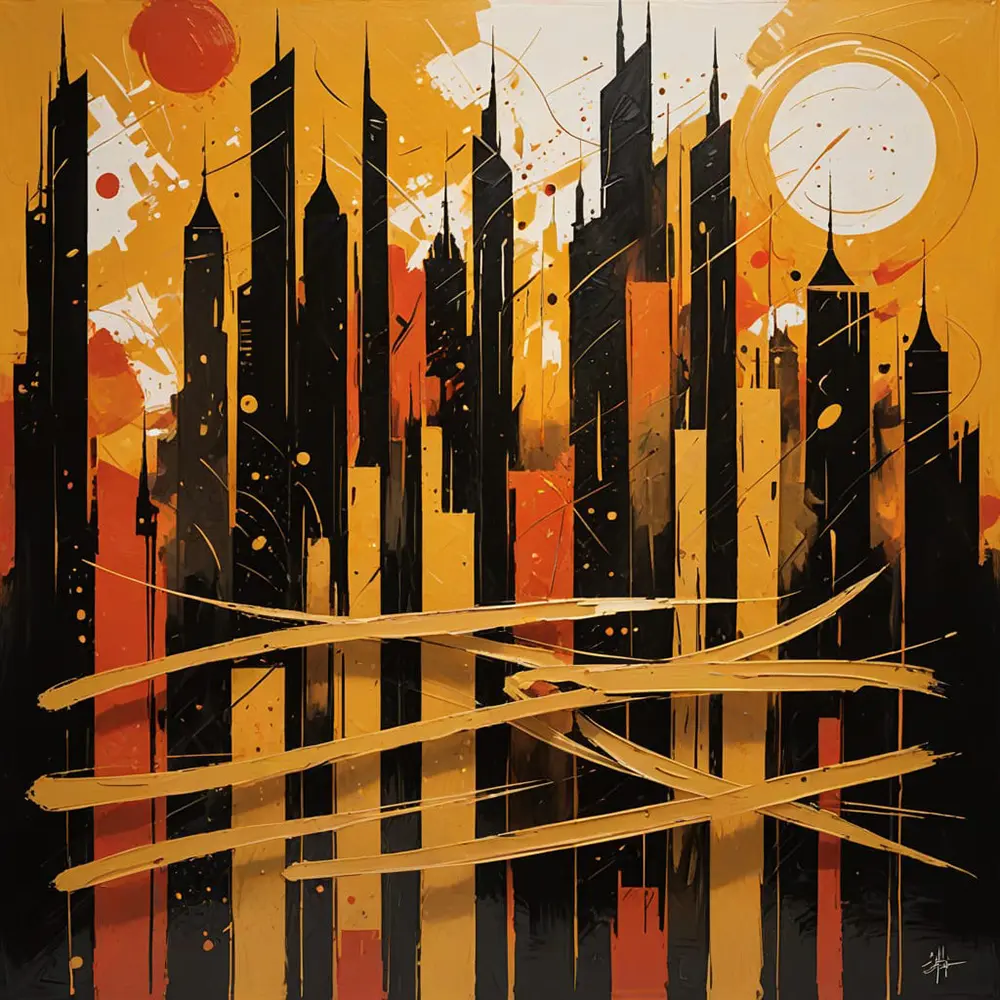
“My letters are not to be read, but to be seen, to be felt.”
Nja Mahdaoui
Hurufiyya, AFRICOBRA and the Black Arts Movement – decolonising the image
The history of art is not the history of Western European and American art, however much that equation has been assumed. The twentieth century saw extraordinary art movements and artistic innovation in the Arab world, across Africa, in Latin America and in East Asia — innovation that developed simultaneously with, and often independently of, the Western movements that received most of the critical attention.
The Hurufiyya movement emerging across Iraq, Tunisia, Morocco, Sudan and the Gulf from the 1940s onwards, reclaimed Arabic script as a vehicle for modernist visual expression. Artists like Shakir Hassan Al Said, Kamal Boullata and Nja Mahdaoui drew on the rich calligraphic tradition of Islamic art not as nostalgia but as radical innovation, fusing ancient letter forms with the formal vocabularies of abstraction and expressionism. Read our full account of Hurufiyya which is one of the most significant artistic currents to emerge from the Arab world in the twentieth century.
AFRICOBRA – the African Commune of Bad Relevant Artists, was founded in Chicago in 1968, declaring that Black art should be made by and for Black communities. Its visual language of vibrant colour, energetic line and explicit political content spoke directly to Black experience and Black liberation. The Black Arts Movement provided the cultural framework within which AFRICOBRA operated and was a declaration that Black cultural production had its own criteria and values, not derived from the white art world’s standards.
Tropicalia in Brazil fused bossa nova, rock and traditional Brazilian folk to produce subversive art under military dictatorship. Caetano Veloso and Gilberto Gil were arrested and exiled. Their music was, by definition, a form of resistance, which is to say, it was a form of art that the state found dangerous enough to suppress. That is always a reliable sign that something important is being done.
Explore art and power – the visual culture that all these movements engaged with.
“When women are in charge of their own culture, everything changes.”
Guerrilla Girls
Land art, Feminist art and the Guerrilla Girls – escaping the gallery
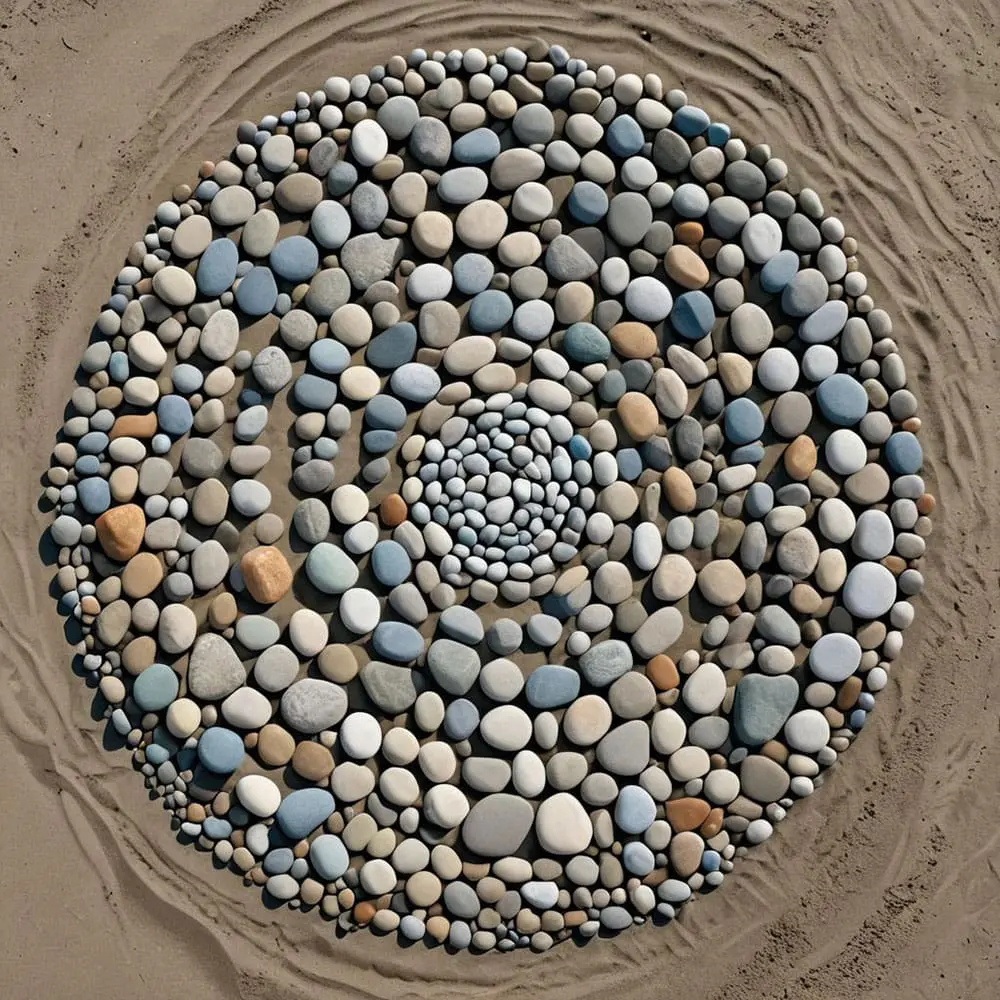
By the late 1960s, a generation of artists had grown deeply uncomfortable with the gallery as an institution – with its white walls, its market economy, its social gatekeeping. Land artists like Robert Smithson built their work in the desert and on the shores of salt lakes. Smithson’s Spiral Jetty – a 1,500-foot coil of black basalt in the Great Salt Lake – could not be bought, sold or transported. It could only be experienced. That was the point.
Feminist art brought this same critique to bear on gender, representation and the systematic exclusion of women from art history. Judy Chicago’s The Dinner Party, Barbara Kruger’s text-image combinations, Cindy Sherman’s self-portraits as cultural constructions: all of them asked who gets to make art, who gets to be represented in it, and on whose terms. The Guerrilla Girls, who began wheat-pasting provocative posters around New York in 1985 in gorilla masks, asked a question that remains unanswered: if you removed all art made by white men from the world’s major museums, what would be left?
The answer – embarrassingly little – was itself the most powerful argument any art movement had made in decades.
Read our articles on feminist art and the Guerrilla Girls for the complete stories or explore art movements that challenged and refused power.
“Art should comfort the disturbed and disturb the comfortable.”
Banksy
Art movements today – ecological art, Blobism and Hyperrealism
The late twentieth and early twenty-first centuries have not produced one dominant movement but many competing ones. Ecological art has emerged as artists reckon with the climate emergency, using land, living organisms and installations to make visible what industrial capitalism has made invisible: our relationship with the natural world. It is one of the most urgent and most politically alive art forms of the present moment.
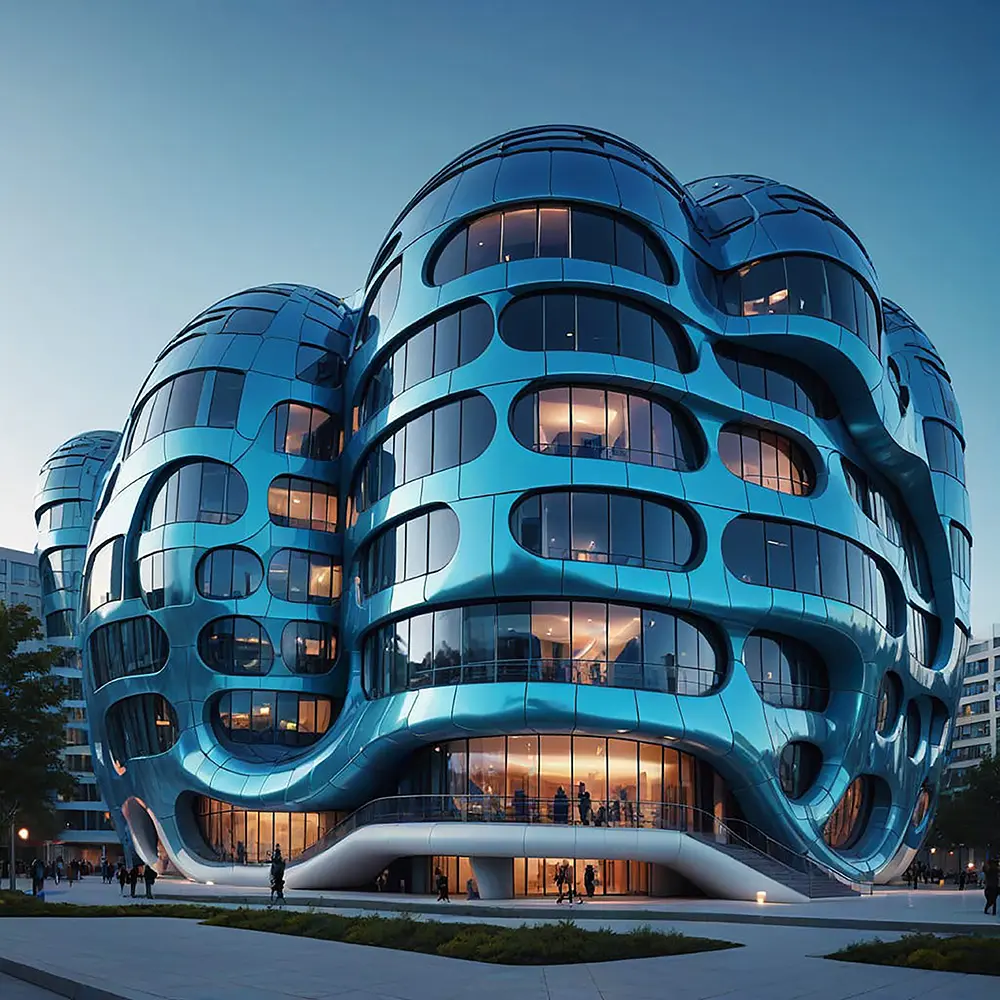
Blobism – or blobitecture – emerged from the digital revolution of the 1990s, when architects like Frank Gehry and Zaha Hadid used computer modelling to produce fluid, organic forms that would have been impossible to build a decade earlier. The Guggenheim Bilbao, the MAXXI in Rome: these buildings announced that architecture’s relationship with the straight line was not inevitable but chosen – and could be unchosen. Kinetic art, Hyperrealism and Tropicalia in Brazil have each blurred the boundaries between categories in ways that continue to provoke.
How art movements connect – influence, rebellion and continuation
No art movement exists in isolation. Every movement is a response to what came before it, either continuing a tradition or explicitly rejecting it, or, most interestingly, doing both at once. Cubism grew from Cezanne’s geometric explorations. Dada grew from Cubism’s formalism – which it regarded, in the context of the First World War, as obscene. Surrealism grew from Dada’s anarchic spirit. Abstract Expressionism grew from Surrealism’s interest in the unconscious. Minimalism grew from Abstract Expressionism’s excesses. Conceptualism grew from Minimalism’s attention to the idea behind the object. The chain continues.
What changes across this history is not the fundamental impulse, it’s the desire to make something new, to say something that has not been said in this way before, but the context in which that impulse operates. The Impressionists were responding to the Paris Salon. The Dada artists were responding to the First World War. The Abstract Expressionists were responding to the rise of American global power. AFRICOBRA was responding to racism and the civil rights movement. The ecological artists are responding to climate breakdown.
To study art movements is to study the moments when human beings decided that the way things were being shown to them was no longer good enough so they made something new instead. That is what makes them worth understanding: not just aesthetically, but politically. In a world saturated with images, the capacity to ask where an image comes from, what assumptions it carries, and whose interests it serves, is one of the most important capacities a person can have. The history of art movements is, in part, a training in that capacity. It is a training in seeing, and in seeing through.
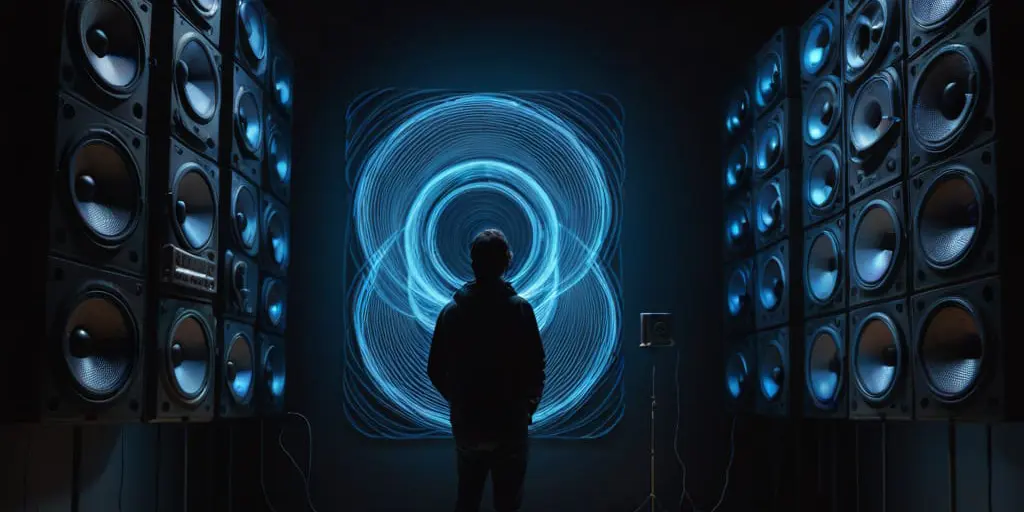
Read even more of our full articles on Pop Art – celebrating the everyday, sound art encourages reflection on perception, psychedelic art that transcended traditional artistic boundaries and California’s joyful rebellion in art.
Explore our thematic hubs for the political context of art movements: Art and Power, Resistance and Solidarity and Music, Sound and Cultural Memory.
Pen vs Sword Books – Book Recommendations
*All Book Links Open a New tab to our Pen vs Sword Books Bookshop
**If you buy books linked to our site, we get 10% commission from Bookshop.org, whose fees support independent bookshops.
1. The Story of Art by E.H. Gombrich
The essential entry point — a complete and endlessly readable history of Western art. Perfect for readers new to the subject and those returning to it.
2. Ways of Seeing by John Berger
The foundational text for understanding how power operates through images. Essential reading for anyone interested in art and politics — and essential for PVS readers.
3. Art Since 1900 by Hal Foster, Rosalind Krauss, Yve-Alain Bois
The definitive scholarly overview of twentieth and twenty-first century art movements, comprehensive and rigorous. The standard reference.
4. Theories of Modern Art by Herschel Chipp
An indispensable anthology of artists’ own manifestos and statements — hear Breton, Gropius, Mondrian and Pollock in their own words.
5. The Shock of the New by Robert Hughes
Hughes’s magisterial survey of modernism remains one of the most vivid and intellectually engaging accounts of how modern art came to be.
Essential reading for understanding the philosophical context behind AFRICOBRA, Hurufiyya and the decolonisation of visual culture.
7. A Bigger Message: Conversations with David Hockney by Martin Gayford
A living master’s reflections on the entire history of art and what it means to make images in the twenty-first century.
“Art is what you can get away with.”
Andy Warhol
JOIN THE PVS READERSHIP
Browse 1000’s more Books in Our Pen vs Sword Books Bookshop
About the Author
Pen vs Sword is an independent magazine publishing long-form cultural criticism, art history and political analysis. We write about artists, movements, thinkers and ideas - from Peter Kennard to Hurufiyya, from the Suffragette movement to the French Revolution. Free to read, independently published.



Post Comment