
About the Author

Pen vs Sword is an independent magazine publishing long-form cultural criticism, art history and political analysis. We write about artists, movements, thinkers and ideas - from Peter Kennard to Hurufiyya, from the Suffragette movement to the French Revolution. Free to read, independently published.




The Legacy of the Soviet Space Dog
On 3 November 1957, a stray dog from the streets of Moscow climbed into a metal sphere, was strapped in place, and became the first living creature to orbit Earth. Her name was Laika. She never came home. Her body circled the planet for months until the spacecraft burned up on re-entry, her remains returning to the atmosphere as a streak of fire that the world never saw.
It is difficult to think of another historical figure that simultaneously embodies innocence, scientific ambition, geopolitical rivalry, ethical controversy, and cultural myth. Laika is everywhere: in murals, in children’s books, in protest posters, in scientific essays, in quiet reflections about the price of progress. Something in her story touches the deepest questions about what human beings are willing to sacrifice in the pursuit of knowledge.
Even now, decades later, her name remains a kind of soft wound in the narrative of the space race, a reminder that achievement and grief often travel together.
For more writing on Resistance & Solidarity in art, culture and political struggle, read related articles across Pen vs Sword.

"We did not learn enough to justify the death of the dog"

Oleg Gazenko
All of our content is free to access. An independent magazine nonetheless requires investment, so if you take value from this article or any others, please consider sharing, subscribing to our mailing list or donating if you can. Your support is always gratefully received and will never be forgotten. To buy us a metaphorical coffee or two, please click this link.
Table of Contents
From Page to Object
This article inspired something physical. View in the Propaganda Department.
*All Book Images Open a New tab to our Bookshop
**If you buy books linked to our site, we get 10% commission from Bookshop.org, whose fees support independent bookshops.

Who was Laika and why was she sent to space?
Long before she became the most famous dog in world history, Laika was just one among thousands of strays wandering Moscow’s cold pavements. Soviet scientists specifically selected street dogs because they assumed such animals were naturally resilient. If they could survive Moscow’s harsh winters, they reasoned, they could survive space.
Laika was small, about 6 kilograms and trainers described her as quiet, calm, almost eager to please. She was chosen not because she was special but because she was ordinary. The randomness of her selection is part of what continues to haunt the story: the sense that any life, plucked from obscurity, can be thrown into the machinery of global ambition.
The Soviet canine cosmonaut programme trained its dogs with a combination of coercion, conditioning, and limited affection. They were placed in increasingly confined spaces. They were taught to live in isolation. Their food was restricted to gel packed into tubes. They were monitored constantly. Yet handlers later admitted they grew deeply attached to Laika. She was affectionate. She nuzzled human hands. She seemed, in some indescribable way, to trust the people preparing her for a mission she could not possibly understand.

What was the Soviet Union’s justification for Laika’s sacrifice?
The Soviet Union launched Laika not because the mission was necessary but because it was urgent. After the stunning success of Sputnik 1, Nikita Khrushchev demanded a second launch in time for the 40th anniversary of the Bolshevik Revolution. Scientists had less than a month to design, build, and test a spacecraft capable of carrying a living animal into orbit. The deadline was politically immovable.
Inside the USSR’s leading space research institutes, engineers and physicians knew the truth: they could send Laika up, but they could not bring her back. The return capsule technology did not exist. Sputnik 2 was, by design, a one way flight.
The ethical debate within the scientific team was not absent, but it was subdued, overshadowed by national pressure. The world was watching. Victory in the space race required symbolic gestures as much as technical breakthroughs. A living being in orbit would show the superiority of Soviet science. It would terrify the Americans. It would make history.
The question of whether it was right to sacrifice a dog did not meaningfully alter the mission timetable.
And yet, within the programme, Laika’s handlers asked for something small but deeply human: that she not die frightened. They insisted she should receive a final meal, and one of her trainers reportedly took her home the night before launch so she could play with his children. Whether this story is entirely accurate or partially mythologised is unclear, but it reveals the emotional fracture at the heart of the mission: affection and exploitation entangled in a single gesture.

Laika’s mission – what happened aboard Sputnik 2?
At Baikonur Cosmodrome, the morning air was cold when Laika was sealed inside Sputnik 2. The spacecraft itself was barely tested. Life support systems were experimental. Sensors were rudimentary. The flight had been rushed at dangerous speed. Engineers were under no illusions that the mission was safe.
At 5:30 a.m. Moscow time, the rocket ignited and climbed through the atmosphere. Sensors later revealed Laika’s heartbeat initially tripled from fear but then steadied as the rocket reached orbit. For a brief moment, as weightlessness settled in, she floated in a state no animal had ever experienced.
She was the first Earth-born creature to see the world from above.
But inside the spacecraft, conditions deteriorated quickly. Insulation panels tore loose. The temperature rose. The cooling system failed. Soviet authorities claimed for years that Laika survived for several days, euthanised painlessly once the mission’s scientific data had been secured. In 2002, the truth finally surfaced: she died within hours from overheating and stress.
Still, her body continued to orbit for 162 days.
"The more time passes, the more I’m sorry about it."

Oleg Gazenko
The World Watches
News of the launch travelled fast. The world was astonished. Newspapers described Laika as a heroine, a pioneer, a symbol of scientific ambition. But almost immediately, debate erupted. Animal welfare groups condemned the mission as cruel. Western nations saw it as proof of Soviet ruthlessness. Yet millions were captivated by the image of a small dog circling the Earth.
Children wrote letters to newspapers asking whether Laika would ever come home. Editorial cartoonists depicted her looking back at the world she had left behind. Pop songs were written in her honour. The emotional weight of her story transcended ideology.
One internal Soviet report noted something telling: the mission had not only advanced scientific knowledge but had triggered “unexpected global sympathy toward the dog.” It was as if humanity suddenly realised that the Cold War involved not just weapons and politics but living creatures at the mercy of ideological competition.

Lessons Written in Heat and Silence
Though rushed, the mission did yield important data. Soviet scientists learned how living organisms respond to long-term weightlessness. They monitored stress levels. They observed cardiovascular reactions. Much of what Laika endured laid the groundwork for subsequent human missions, including Yuri Gagarin’s historic flight in 1961.
Yet much of the scientific community, even within the USSR, privately acknowledged that sending Laika up without a plan for retrieval was ethically troubling. Scientists later expressed regret. Oleg Gazenko, one of the mission’s key researchers, famously said: “We did not learn enough from this mission to justify the death of the dog.”
It was a quiet admission that scientific achievement had been overshadowed by political urgency.
"It was a victory for the whole country and a global achievement"

Oleg Mukhin
The ethical arguments against the Laika space mission
Laika’s death became a turning point. Public outrage in the West, although partly driven by Cold War rhetoric, also reflected a genuine cultural shift. People were beginning to question the morality of using animals for dangerous scientific experiments, especially when death was guaranteed.
By the late 1960s, both the USSR and the United States adopted stricter protocols for animal welfare in space research. Scientists refined training methods. They improved life support systems. They insisted on the possibility of return missions before approving flights involving living creatures.
Laika became a symbol in ethical debates far beyond space exploration. She appeared in discussions of laboratory testing, biomedical experiments and the philosophical boundaries of human responsibility toward animals. Her image became a proxy for broader moral questions: How do we balance scientific progress with compassion? How do we measure the value of a life that cannot give informed consent? And what do we lose, ethically and emotionally, when we treat living beings as instruments?
Laika lives on not just in science but in culture.
The Cultural Afterlife of Laika the Space Dog Who Could Not Return
Laika lives on not just in science but in culture. Artists have long been drawn to her story because it sits at the intersection of tenderness and tragedy. She appears in murals across Eastern Europe, often depicted with an expression of quiet bewilderment. Musicians have written symphonies and indie songs in her name. Writers have used her as a metaphor for innocence caught in the machinery of empire.
The Soviet government eventually commemorated her with a monument in 2008, a decision that reflected not only national pride but national remorse. In an altered political landscape, acknowledging her sacrifice became a way to rehumanise a past often marked by secrecy and cold calculation.
Laika is also referenced in discussions about the political psychology of the space race, often used to critique the way nations turn animals and humans into symbols to win ideological battles. Her name appears in ethics textbooks, political analyses, children’s books that soften the tragedy, and graphic novels that restore its bite.

Present Tensions – Animal Testing, Progress and Public Conscience
Laika’s story resonates powerfully in a world still grappling with the ethics of animal testing. Biomedical research, psychological experiments, space biology, and pharmaceutical testing all continue to use animals, though under more regulated frameworks.
Advances in technology have introduced new alternatives: organoids, computer modelling, synthetic tissue, and microgravity simulators. Yet some scientists argue that certain biological complexities cannot yet be replicated without live animal subjects. The debate is ongoing, and passionate, and rarely simple.
Laika has become an emblem for activists who argue that necessity must be better defined. Too often, they contend, “need” is shaped by political pressure or commercial interests rather than genuine scientific urgency. Her story is invoked in campaigns for reform, often as a reminder that behind every data point is a living creature whose experience matters.

Toward an Ethical Future in Space
As humanity returns its focus to the Moon, Mars, and deep space, questions about the treatment of living organisms re-emerge. Should animals ever again be sent into dangerous or terminal missions? Should biological experiments in orbit prioritise synthetic models? Should international law protect non-human life in the pursuit of planetary exploration?
Many argue that the legacy of Laika demands a shift in how we think about exploration itself. Space is no longer a battleground for superpower prestige but a shared frontier. The scientific community increasingly emphasises transparency, consent in human missions, and strict welfare standards for any non-human subjects. There is also a growing belief that robotic and artificial systems should take on the risks once assigned to animals.
A Different Kind of Orbit
Laika’s story is not simply about a dog sent into space. It is about the human capacity to dream far beyond our immediate horizon, and our equally human tendency to overlook the costs of those dreams. Her death is a reminder that scientific achievement is never morally neutral. It demands choices, sacrifices, and deep ethical scrutiny.
In the decades since her flight, the world has changed. Our understanding of ethics has matured. Our appreciation of non-human intelligence and suffering has deepened. And yet the tension she represents remains unsolved: how do we weigh the value of progress against the value of a single life?
Perhaps the truest way to honour Laika is not through monuments or songs but through vigilance. Through the insistence that future exploration must be grounded not only in ambition but in compassion. Through the belief that no living creature should be treated as expendable in the name of human triumph.
Laika orbits us still, but now as a story, a lesson, a quiet presence reminding us that the path to the stars must never again be paved with silence and suffering.
Read our full articles on the ethics of the Cold War space race and its human costs, Concepcion Picciotto – a life spent protesting what governments do in secret and Bertrand Russell and the ethics of nuclear arms and the Cold War.
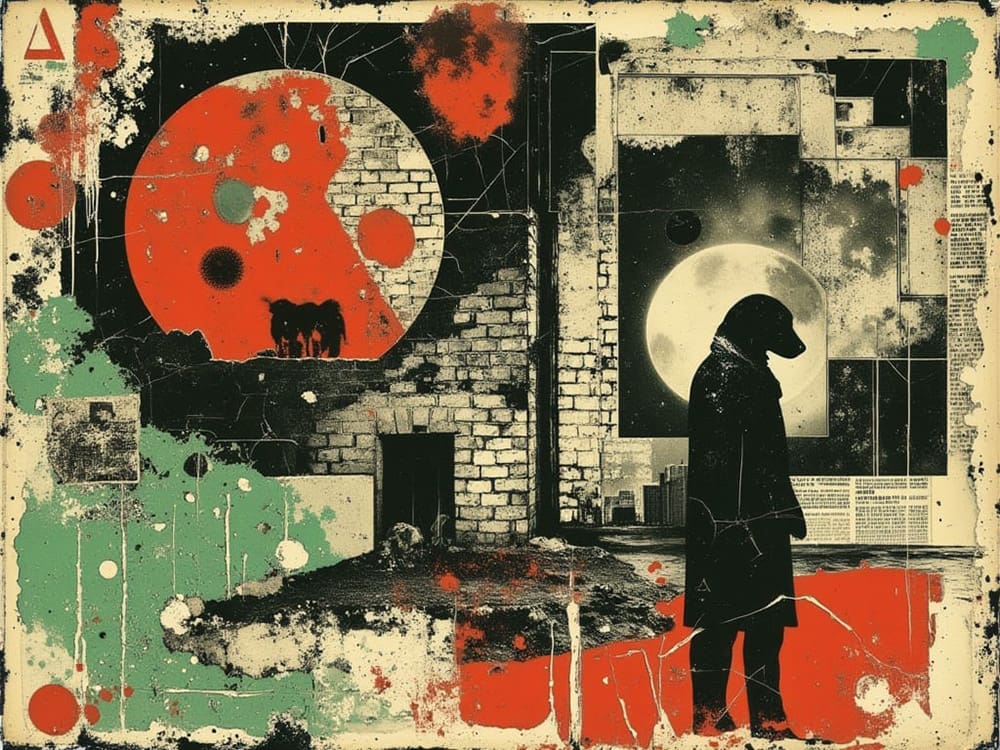
Millions were captivated by the image of a small dog circling the Earth.
JOIN THE PVS READERSHIP
Browse 4000+ Books in Our Pen vs Sword Books Bookshop
About the Author
Pen vs Sword is an independent magazine publishing long-form cultural criticism, art history and political analysis. We write about artists, movements, thinkers and ideas - from Peter Kennard to Hurufiyya, from the Suffragette movement to the French Revolution. Free to read, independently published.











Post Comment