About the Author
Pen vs Sword is an independent magazine publishing long-form cultural criticism, art history and political analysis. We write about artists, movements, thinkers and ideas - from Peter Kennard to Hurufiyya, from the Suffragette movement to the French Revolution. Free to read, independently published.




Pioneering Minds and the Struggle for Recognition
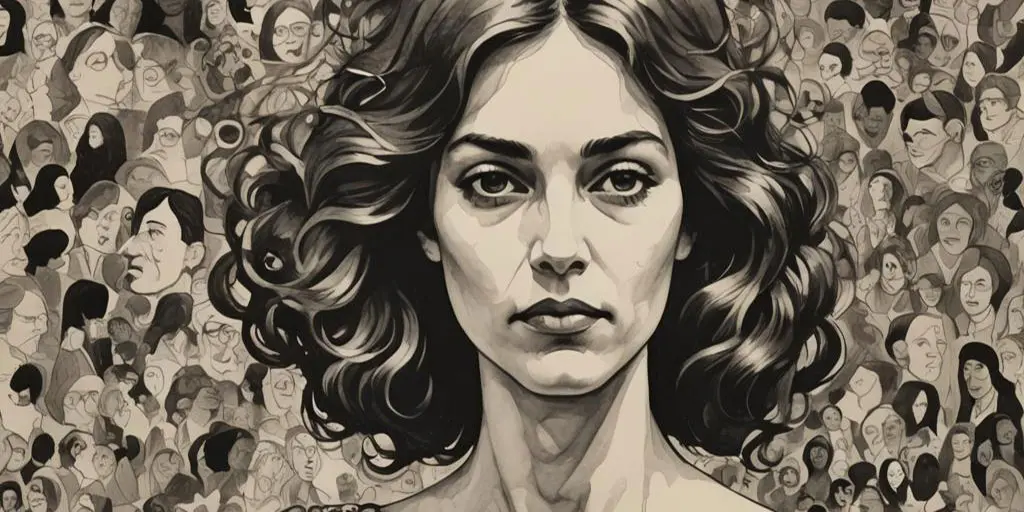
From Rosalind Franklin to Jocelyn Bell Burnell, women in science have made ground-breaking discoveries yet faced systemic barriers.
In this article, we will traverse centuries and continents, exploring the discoveries, challenges, and legacies of women in science. From the hidden laboratories of the past to contemporary global initiatives, the story unfolds not just as biography but as a critical examination of structural inequity, cultural expectations, and the transformative power of inclusion. Explore their achievements and ongoing fight for recognition globally.
Find out more about the women in history who changed the world – women in science and the leaky pipeline.
For more writing on Resistance & Solidarity in art, culture and political struggle, read related articles across Pen vs Sword.
"We must believe that we are gifted for something and that this thing must be attained"

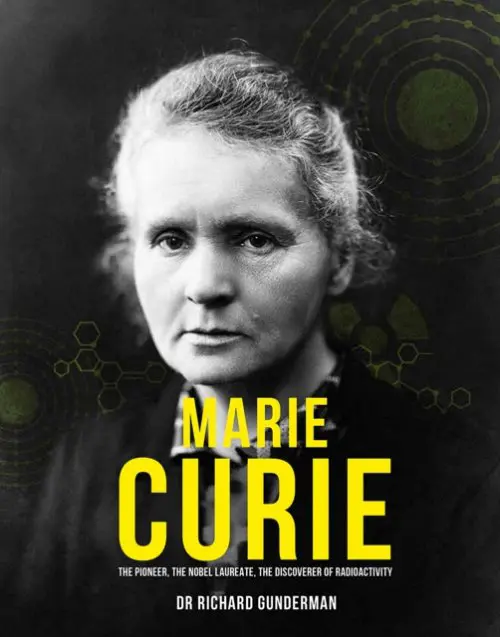
Marie Curie
All of our content is free to access. An independent magazine nonetheless requires investment, so if you take value from this article or any others, please consider sharing, subscribing to our mailing list or donating if you can. Your support is always gratefully received and will never be forgotten. To buy us a metaphorical coffee or two, please click this link.
Table of Contents
From Page to Object
This article exists as a physical thing. View in the Propaganda Department.
*All Book Images Open a New tab to our Bookshop
**If you buy books linked to our site, we get 10% commission from Bookshop.org, whose fees support independent bookshops.
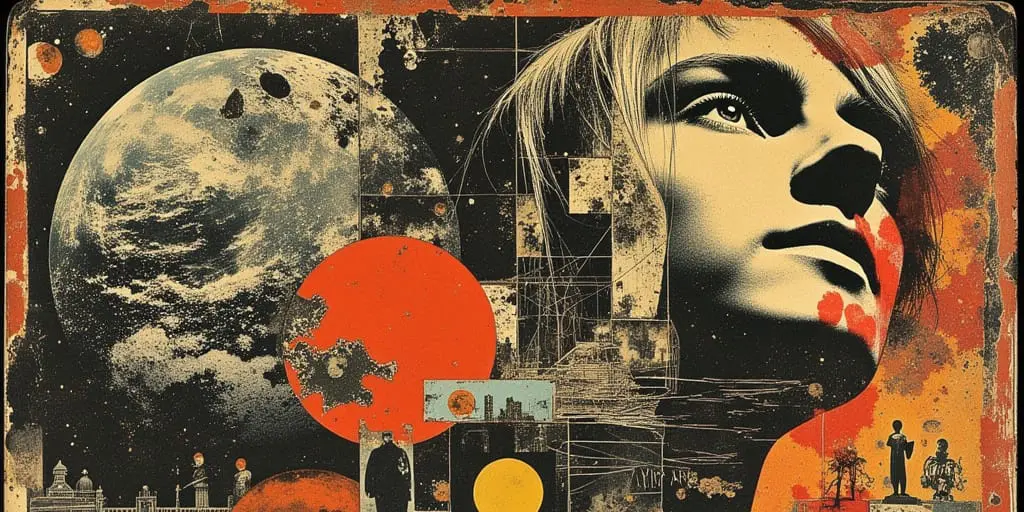
A Sky Full of Signals and a History Full of Silence
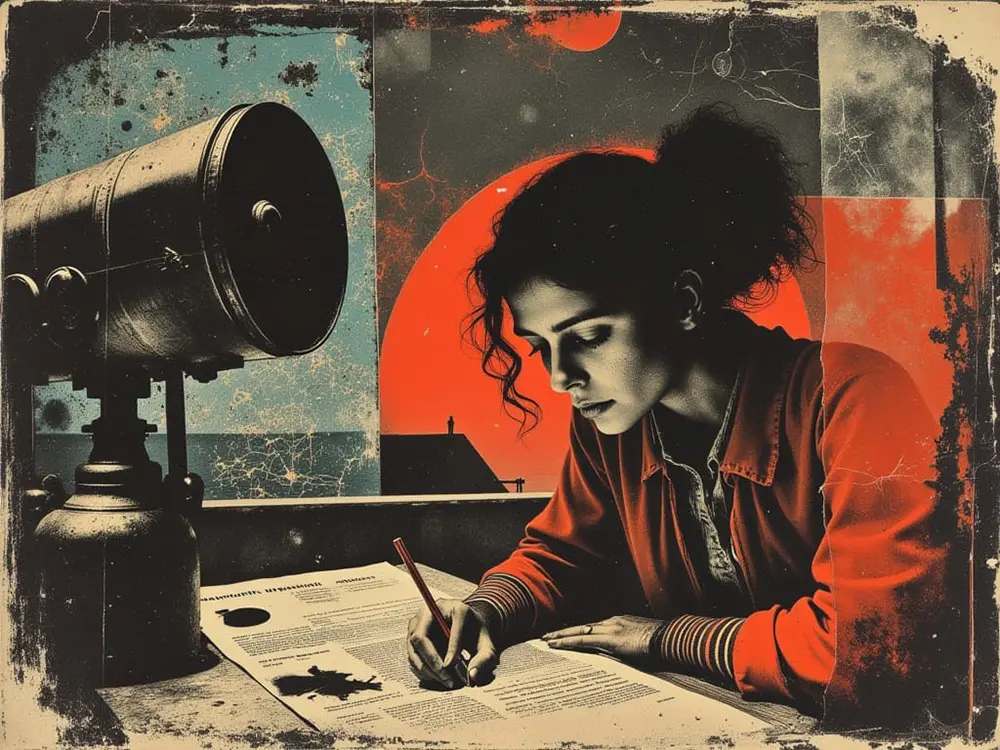
In the winter of 1967, Cambridge nights carried a particular kind of silence, the kind that settles over a landscape brimming with possibility but heavy with unspoken doubts. Inside a makeshift shed at the Mullard Radio Astronomy Observatory, Jocelyn Bell Burnell stood over a long ribbon of chart paper streaming from the radio telescope she helped build with her own hands. The telescope’s wooden beams stretched like ribs of some skeletal creature left to commune with the cosmos. Bell Burnell, a young researcher with a meticulous eye and relentless patience, examined the faint blips scattered across the printout. Most would dismiss such irregularities as noise. But she sensed a pattern, an insistence, a pulse.
Those pulses would become one of the most significant astrophysical discoveries of the 20th century. They revealed neutron stars spinning at astonishing speeds, emitting rhythmic radio waves. These objects would be known as pulsars. Her discovery transformed astrophysics and reshaped our understanding of stellar evolution. Yet when the Nobel Prize was awarded for the work, Bell Burnell’s name was absent. The scientific community celebrated the pulsars while overlooking the woman whose persistence brought them into view. Time and historians would correct the narrative, but the Nobel decision remains a symbol of the structural shadows that obscured countless women in science.
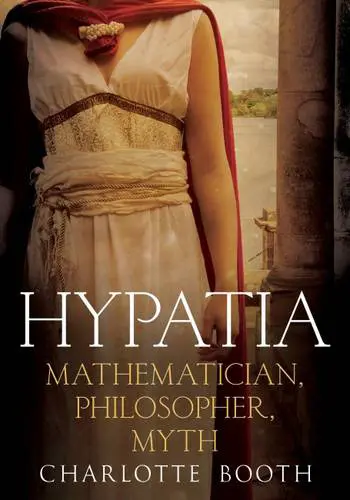
Stories like hers echo across centuries. Caroline Herschel, hunched over star charts in the 18th century, traced celestial paths with unwavering precision, discovering comets that became landmarks of astronomical history. Rosalind Franklin, her laboratory darkroom glowing with disciplined intensity, captured the most important image of DNA ever taken. Sophia Louisa Jex-Blake, navigating Victorian hostility and legal warfare, fought for women’s right to study and practice medicine. Their lives stretch across continents and centuries, yet they share a quiet connective tissue: brilliance unacknowledged, discoveries uncredited, work dismissed or appropriated, legacies reconstructed only after decades of omission.
To examine women in science is not to compile a list of late recognitions or to rescue forgotten heroes from the footnotes of history. It is to confront the global systems that dictated who could enter laboratories, who could sign their names on papers, who could receive funding, who could claim authority, and who would be permitted to shape humanity’s understanding of the natural world. It is to trace how access to knowledge has always been an expression of power.
Science has long presented itself as a meritocracy, a noble pursuit guided by reason and evidence. The stories of these women reveal a far more complex reality, one where intellect had to contend with gendered expectations, institutional walls, cultural constraints, and patriarchal structures embedded deep within academia. This article traces that tension, moving through personal stories, structural critiques, and historical transformations to reveal not only what women discovered, but what they endured so that discovery could happen at all.
A Legacy Written in Uncredited Light
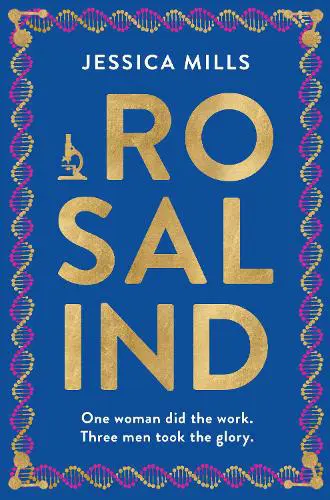
The story of Rosalind Franklin begins not with DNA, but with a mind shaped by rigour and a fierce devotion to experimental clarity. When she stepped into the basement laboratory at King’s College London, she found herself in a space that carried both promise and tension. The lab was cold, the equipment unwieldy, the atmosphere uneasy. Yet Franklin worked with unshakeable focus, bringing order and precision to techniques that demanded exacting discipline. X-ray crystallography was neither glamorous nor forgiving. It required her to coax patterns from molecular structures through hours of exposure, refinement, and analysis.
One afternoon in 1952, Franklin captured what would become one of the most important scientific images ever produced: Photo 51. The image, with its crisp X-shaped diffraction pattern, revealed the helical structure of DNA. It crystallised decades of speculation about the molecule’s architecture and unlocked the key to understanding genetic transmission. What followed became one of the most debated stories in scientific history. Without her knowledge or permission, the photograph was shown to James Watson, who, alongside Francis Crick, used it as the foundation for their model of the double helix. Their Nobel Prize would come years later, long after Franklin had died of ovarian cancer.
Franklin’s contribution was eventually recognised by scholars, historians, and scientific institutions. Yet her story raises fundamental questions about scientific collaboration, credit, and gendered power. Recognition in science is often presented as objective, a consequence of brilliance and contribution. In reality, it reflects citation patterns, authorship hierarchies, gatekeeping, and the cultural narratives we choose to celebrate. Why Franklin was not included in the Nobel equation is not a mystery of merit, but a consequence of systemic bias. Hers was a mind not only worthy of recognition but essential to one of the most important discoveries in biology.
Caroline Herschel: Cataloguing the Heavens
The same patterns appear in astronomy, the field of Caroline Herschel. In the late 1700s, she mapped the heavens with painstaking care. While assisting her brother William, she independently identified nebulae and comets, her observational logs blossoming with new findings. She became the first woman to discover a comet, a feat that brought astonishment even to those who doubted the intellectual capacities of women. She went on to discover seven more. Herschel’s contributions shaped the catalogues used by astronomers for generations. She received a salary for her work, an unprecedented acknowledgment for a woman of her era, yet her fame never equalled her brother’s.
Caroline Herschel’s story is not one of a woman behind a great man, but of a scientist whose work expanded the celestial map. Her recognition, though significant for her time, remained constrained by gender norms that defined scientific authority as inherently male. The astronomical community remembered her, but not always with the full gravity her contributions deserved. Her legacy has grown in recent decades, illuminated by historians who have been willing to look closely at the margins of scientific records.
Sophia Louisa Jex-Blake and Medical Reform
Where Franklin and Herschel shaped scientific understanding itself, Sophia Louisa Jex-Blake fought to make scientific education accessible to women at all. In 19th century Britain, the idea of a woman studying medicine was considered scandalous. Jex-Blake applied to study at the University of Edinburgh and was rejected solely because she was a woman. Her subsequent legal battles and public campaigns transformed her personal struggle into a national debate about who could practice medicine. She eventually co-founded the London School of Medicine for Women, creating one of the first formal pathways for women to enter the profession.
Her contribution to science is measured not in discoveries, but in dismantled barriers. Medical progress is not only the result of research laboratories and clinical breakthroughs. It is also a product of access to training, distribution of resources, and the ability to participate in the intellectual life of medicine. Jex-Blake expanded the scientific community by fundamentally altering who could be part of it.
These narratives reveal a global pattern where women advanced knowledge despite systemic attempts to limit their participation. To read their stories is to confront the immense persistence required to succeed in fields that were not designed to include them.
"Science and everyday life cannot and should not be separated."

Rosalind Franklin
The Leaky Pipeline and Structural Barriers
Scientific discovery is often described as a lonely pursuit, the product of individuals guided by curiosity. But the ability to pursue that curiosity depends on structures far larger than individual will. Women entering scientific fields historically faced not only social disapproval, but institutional exclusion embedded in universities, laboratories, funding bodies, and professional societies. These structures formed an architecture of barriers that shaped every aspect of women’s scientific lives.
In academic institutions, women found themselves barred from laboratories or permitted only as assistants, denied the authority to lead research or publish under their own names. Even when they were allowed to participate, their contributions were often attributed to male supervisors or collaborators. This was not accidental but reflected established norms that defined scientific legitimacy through masculinised ideals. When Caroline Herschel received a salary from King George III, it was heralded as a groundbreaking gesture because it was almost unthinkable for a woman to be recognised as a professional scientist. The exception proved the rule.
Gender bias in science is not always explicit.
Financial inequities shaped the trajectory of entire careers. In modern contexts, research funding remains concentrated in the hands of male scientists. Women secure fewer major grants and often at lower amounts. This disparity is amplified by the fact that funding committees have historically undervalued female led research proposals, even when quality is equal. Publication patterns reflect similar inequities. Studies reveal that female scientists are cited less frequently than their male peers, creating ripple effects that influence promotions, awards, and tenure.
The term “leaky pipeline” emerged to describe the phenomenon of women leaving scientific careers at higher rates than men. Yet the metaphor can oversimplify what is often a complex negotiation between aspiration, discrimination, isolation, and institutional failure. The pipeline does not leak by accident. It leaks because academic culture continues to reward constant availability and long working hours in ways that disproportionately harm women, especially those with caregiving responsibilities. It leaks because mentorship opportunities remain uneven. It leaks because hostile or dismissive work environments push talented individuals away.
Even recognition itself has functioned as a barrier. Awards, committees, editorial boards, and professional societies have historically been dominated by men. This meant that even when women produced work of extraordinary calibre, they often lacked the visibility needed to transform that work into influence. The Nobel exclusion of Jocelyn Bell Burnell is emblematic of this dynamic, but it is only one example in a long litany of overlooked contributions.
Gender bias in science is not always explicit. Often it manifests in the quiet assumptions that shape who is considered authoritative, who is invited to collaborate, who is encouraged to lead, who is cited, and who is remembered. These cultural biases operate globally. Whether in European medical schools, American research institutions, African STEM programs, or Asian universities, the pattern is consistent: brilliance does not guarantee recognition when structures privilege certain identities over others.
Yet the persistence of women scientists and advocates has gradually reshaped these structures. Their stories are not solely tales of exclusion but also of transformation. They demonstrate that scientific progress depends not only on discovery, but on the continual expansion of who is permitted to discover.
Historical Echoes: From Hypatia to Marie Curie
The stories of Franklin, Herschel, Jex-Blake, and Bell Burnell are part of a much older lineage. Long before universities formalised laboratory science, women across cultures contributed to mathematics, astronomy, medicine, and natural philosophy. Their contributions were often mediated through family connections or informal teaching roles because formal institutions rarely admitted women.
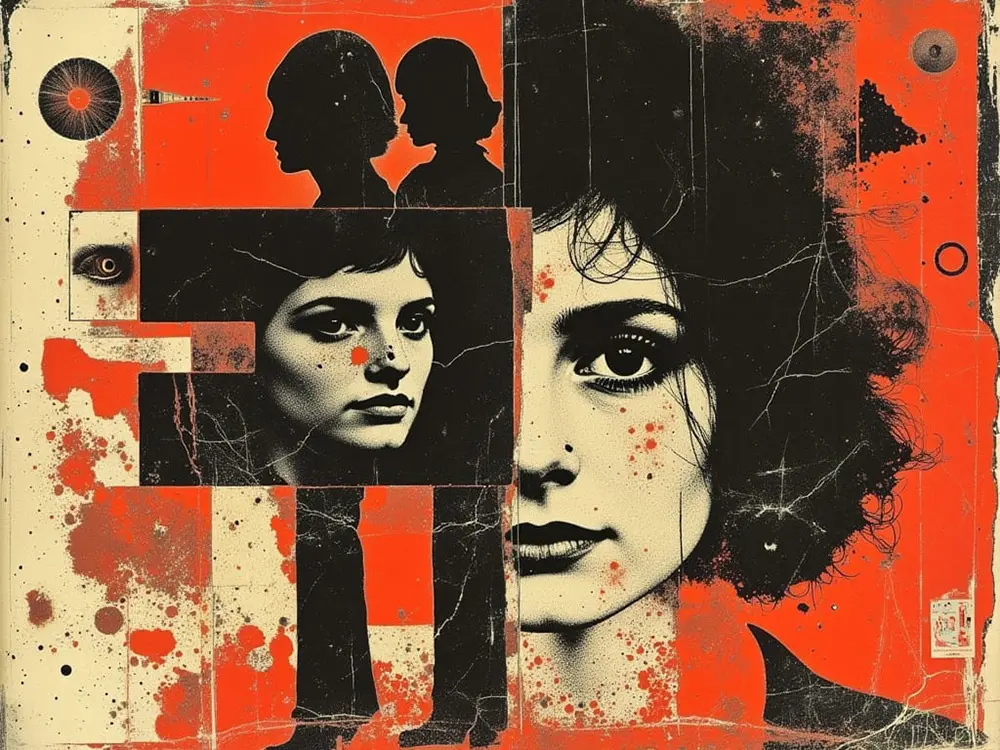
Hypatia of Alexandria stands as one of the earliest documented women in mathematics and astronomy. Her life unfolded in a city alive with intellectual crosscurrents, yet charged with political and religious tensions. As a respected scholar and teacher, Hypatia developed innovations in astronomical devices and wrote extensively on mathematics. Her brutal murder by a political mob in 415 CE has been interpreted as an attack not only on her gender but on the intellectual freedom she embodied. Her legacy survived through the writings of her students, a fragile testament to the precariousness of women’s knowledge in antiquity.
Centuries later, Maria Sibylla Merian revolutionised entomology through her meticulous studies of insect metamorphosis. Working at a time when scientific observation was dominated by men and steeped in myth, Merian travelled to Suriname to study species in their natural environments. Her work combined art and science with remarkable precision, challenging assumptions about spontaneous generation and influencing natural history for generations.
Marie Curie offers a very different historical vantage. Her career unfolded in the early 20th century, at a moment when institutional barriers were shifting yet still formidable. Curie’s research into radiation transformed physics and medicine, earning her two Nobel Prizes. She remains the only person in history to win Nobels in two scientific fields. But even Curie confronted intense hostility, xenophobia, and personal attacks that attempted to discredit her work and authority. Her achievements were extraordinary not because she triumphed despite discrimination, but because she changed the scientific landscape in ways that transcended it.
These earlier figures show that the fight for recognition is not merely a modern struggle. It is a thread woven through scientific history, shaped by cultural norms, political structures, and deeply entrenched beliefs about gender.
Beyond Recognition: Global and Cultural Impact
The impact of women in science extends beyond laboratories and academic journals. Their achievements influence how societies imagine intellectual potential, how young people form aspirations, and how communities interpret the relationship between knowledge and authority.
In classrooms across the world, stories of women scientists challenge narrow narratives about who belongs in STEM. When students learn about Franklin alongside Watson and Crick, or Herschel alongside her brother, the scientific canon expands in ways that create space for new generations of thinkers. Representation is not symbolic. It shapes career trajectories, self perception, and societal expectations.
Globally, initiatives have emerged to promote women’s participation in STEM. UNESCO’s Women in Science Program brings visibility to leading female scientists and advocates for structural reforms that enable their work. The L’Oréal UNESCO For Women in Science Awards amplify the research of scientists across continents, offering financial support and international recognition.
In Africa, grassroots STEM programs encourage girls to pursue engineering and technology, challenging the idea that scientific careers are reserved for men. In Asia, mentorship networks have connected early career researchers with established scientists who provide guidance through the complexities of academia. In Latin America, women have become leaders in environmental science, medicine, and physics, shaping national research agendas and international collaborations.
Science is both global and local. It is shaped by community, culture, and access. Women scientists around the world are redefining these dynamics.
The landscape of science for women today is one of mixed realities.
Modern Pioneers and Recognition Today
Katherine Johnson’s mathematical genius helped send humans into space. Her calculations of orbital trajectories were vital to NASA’s early missions, yet recognition came decades later. Her story reveals how race and gender intersect to shape scientific visibility.
May Britt Moser, who won the Nobel Prize for her work on the brain’s spatial navigation system, demonstrates how far women have come in neuroscience. Yet even her success reflects the rarity of women in top research positions.
Emmanuelle Charpentier and Jennifer Doudna received the Nobel Prize for CRISPR gene editing in 2020, becoming the first all woman team to win a Nobel in science. Their recognition marks a milestone, yet the rarity of such acknowledgments speaks to the ongoing struggle.
These contemporary examples illustrate that recognition is improving, but structural inequalities – leadership gaps, funding disparities, and publication bias – persist.
Contradictions and Continuing Challenges
The landscape of science for women today is one of mixed realities. The presence of women in laboratories, universities, and research institutions has expanded dramatically. Yet the challenges they face are not relics of the past. They continue to encounter subtle biases, microaggressions, and structural obstacles that shape career trajectories.
This contradiction reflects a deeper tension within the scientific enterprise itself. Science valorises objectivity, yet the structures surrounding it have historically been anything but objective. The stories of women reveal that scientific progress is intertwined with social progress. Breakthroughs in knowledge require breakthroughs in equity.
If history teaches us anything, it is that recognition must be fought for, advocated for and institutionalised. It cannot be left to chance or posthumous correction.
"If you know you are on the right track nobody can turn you off."

Barbara McClintock
Toward a More Equitable Horizon
The future of science depends on expanding its boundaries. Recognition is not just an act of looking backward but an investment in what comes next. When young women see their predecessors celebrated, they see possibilities for themselves. When institutions reform their hiring practices, citation standards, and funding processes, they loosen the grip of archaic structures. When global collaborations include diverse voices, science becomes richer and more innovative.
And when we revisit stories like those of Franklin, Herschel, Jex-Blake, and Bell Burnell, we do more than correct the record. We expand our understanding of what science is and who it belongs to. These women not only shaped their fields they reshaped the narrative of scientific discovery itself.
Read about Margaret Atwood – a writer who imagines the futures that depend on women in science.
Read more of our Sword articles: Carl Sagan – who celebrated what women in science made possible, women in history who changed the world and future imaginaries – the futures not imagined because of who is excluded.
JOIN THE PVS READERSHIP
Browse 4000+ Books in Our Pen vs Sword Books Bookshop
About the Author
Pen vs Sword is an independent magazine publishing long-form cultural criticism, art history and political analysis. We write about artists, movements, thinkers and ideas - from Peter Kennard to Hurufiyya, from the Suffragette movement to the French Revolution. Free to read, independently published.





Post Comment