About the Author

We write image rich articles about Today's Questions and Events that have Shaped Us. Deep Dives into Artists, Wordsmiths, Thinkers and Game Changers. It's Mightier When You Think!




Blobism: When Buildings Began to Flow
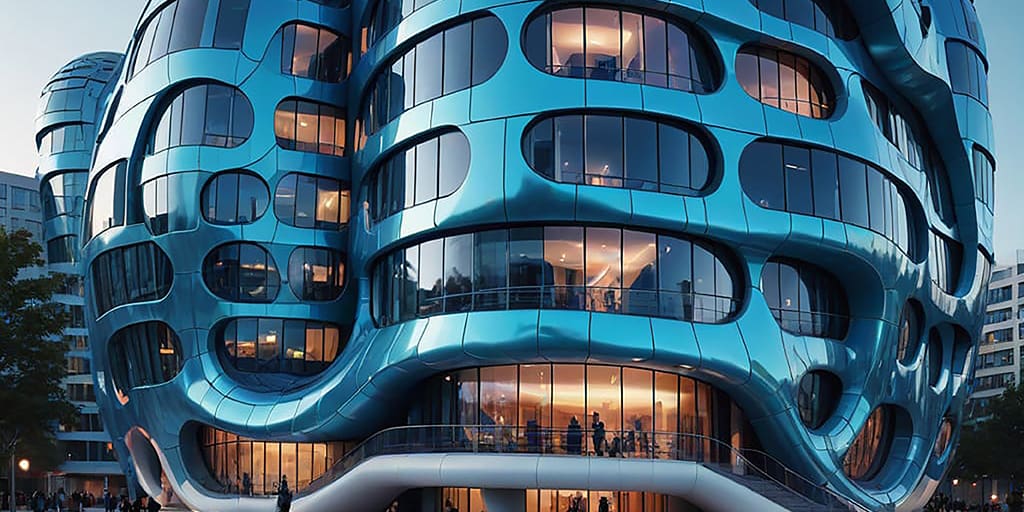
Architecture has always been shaped by geometry – straight lines, right angles, and rigid forms. But in the late 20th century, something began to shift. Architects started experimenting with shapes that seemed alive – smooth curves, bulging volumes, and amorphous forms that appeared to have grown rather than been built. This was the birth of Blobism: an architectural style that embraced fluidity, organic growth, and the radical potential of computer-aided design.
Blobism is more than a visual style – it represents a philosophical departure from rectilinear order toward forms inspired by nature, biology, and even digital morphogenesis. It was born in an era when software like CATIA, Rhino, and Maya gave architects unprecedented freedom to model complex curves and when new fabrication techniques made such designs buildable at scale.
For more cultural criticism examining how Art & Power intersect through visual culture, representation and ideology, explore related Pen vs Sword articles.
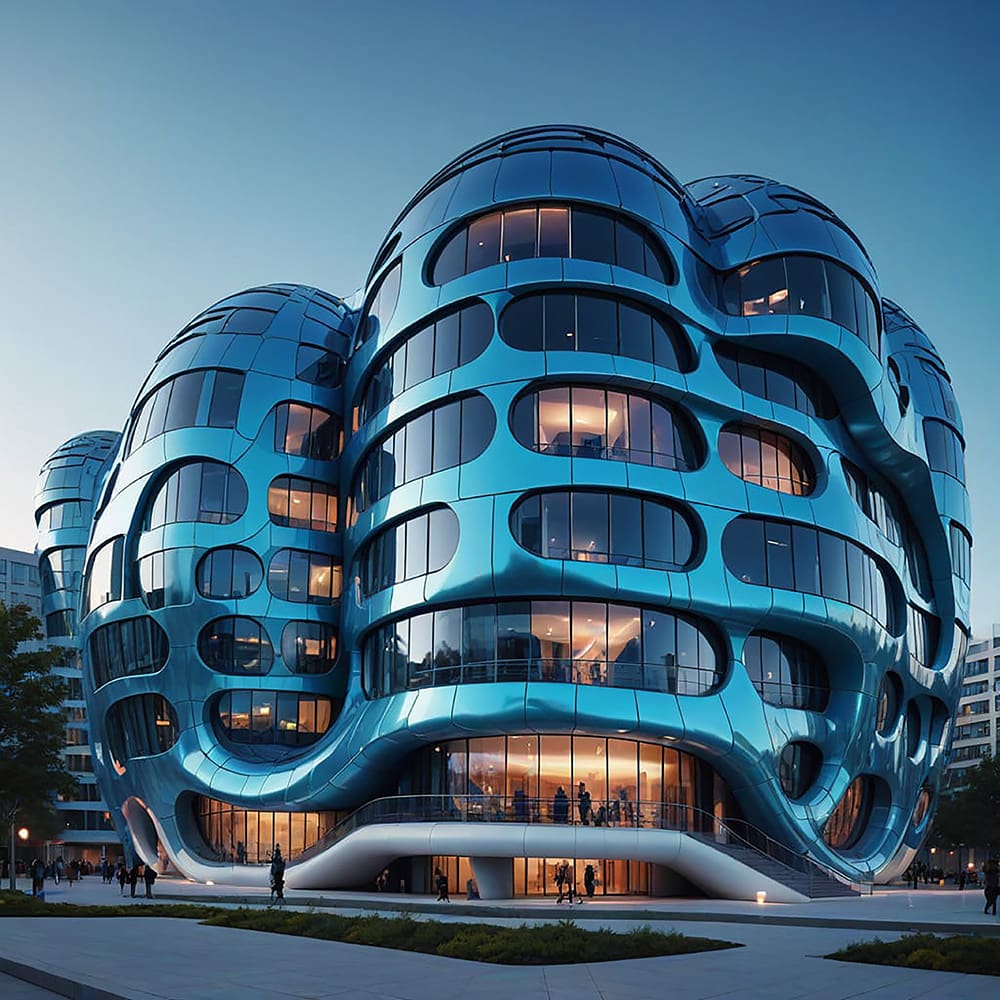
Table of Contents
From Page to Object
This article inspired something physical. View in the Propaganda Department.
The Enemy is Listening Print | Save Democracy Print | City Gent Shirt | Peter Kennard Collection
*All book images suggest books that offer in-depth insights into the history, design philosophy, and impact of Feminist Art and all book images Open a New tab to our Bookshop.
**If you buy books linked to our site, we get 10% commission from Bookshop.org, whose fees support independent bookshops.

What is Blobism and how did it emerge?
The term “blob architecture” was first popularised in the 1990s by architect Greg Lynn, whose essay “Blob Tectonics” and digital experiments positioned these biomorphic shapes as the next frontier of design. Using 3D modelling tools, Lynn and other pioneers could simulate the behaviour of fluids, surfaces, and organic growth – allowing them to “design” forms that looked more like living organisms than mechanical structures.
How digital design tools made Blobism possible
Blobism emerged at the intersection of architecture, digital art, and computational design. Advances in NURBS (Non-Uniform Rational B-Splines) modelling allowed architects to create and manipulate complex curves with mathematical precision. This was a decisive break from the CAD tools of the 1980s, which were better suited to orthogonal, box-like structures.
The style gained legitimacy as rapid prototyping, CNC milling, and custom-fabricated cladding systems made it possible to turn virtual blobs into physical buildings. By the late 1990s and early 2000s, Blobism had entered the architectural mainstream, appearing in cultural centres, commercial buildings, and pavilions across the world.

Defining Characteristics of Blob Architecture
Blobism can be identified by several recurring features:
- Organic, Amorphous Forms: Buildings resemble pebbles, bubbles, or living cells.
- Fluid Continuity: Surfaces curve seamlessly without sharp edges.
- High-Tech Skin: Often clad in reflective metals, tessellated panels, or composite materials.
- Digital Genesis: Designs originate in 3D modelling software, often influenced by algorithms or parametric inputs.
- Integration with Environment: Despite futuristic forms, many blob buildings respond to their surroundings through flow and orientation.
“In blob architecture, form follows feeling as much as function.”
Peter Cook
The Digital Revolution in Architecture
Blobism could not exist without the digital revolution in design. Software like CATIA (originally developed for aerospace engineering) enabled architects to create double-curved surfaces and complex geometries. Rhino’s plug-ins like Grasshopper introduced parametric design, allowing designers to change variables – such as curvature, surface density, or light penetration – and instantly update the model.
These tools not only enabled radical new forms but also bridged the gap between design and construction. Digital fabrication meant that each panel of a blob building’s skin could be custom-made to fit its unique curvature, something impossible with conventional building methods.
The movement coincided with a philosophical shift in architecture, one inspired by complexity theory, biology, and emergent systems. Architects began thinking less like builders of static monuments and more like designers of evolving, adaptive forms.

Three Iconic Examples of Blobism
Selfridges Building, Birmingham, UK – Future Retail in Organic Form
Designed by Future Systems and completed in 2003, the Selfridges department store in Birmingham is one of the most recognisable examples of blob architecture. Its undulating form is clad in 15,000 anodised aluminium discs, creating a rippling, almost liquid façade
The building’s design was inspired in part by a Paco Rabanne sequined dress, translating fashion’s fluidity into architectural form. Inside, the curves influence spatial flow, with escalators and walkways weaving organically through the structure. For a commercial building, this was a bold rejection of the rectangular retail box, signalling that blobism could be both avant-garde and functional.
Kunsthaus Graz, Austria – The Friendly Alien
Opened in 2003 and designed by Peter Cook and Colin Fournier, the Kunsthaus Graz is affectionately known as “The Friendly Alien.” Its biomorphic form appears to hover over the city, a smooth, bulging blue surface punctuated by nozzle-like skylights.
What sets the Kunsthaus apart is its fusion of form and technology. The building’s skin is embedded with a BIX façade – a low-resolution media screen that can display animations at night, turning the blob into an interactive urban landmark. This integration of organic form and digital media captures the spirit of Blobism in the digital age.
“Architecture can be as sensual and fluid as the world it inhabits.”
Zaha Hadid

Heydar Aliyev Center, Baku, Azerbaijan – The Flow of a Nation
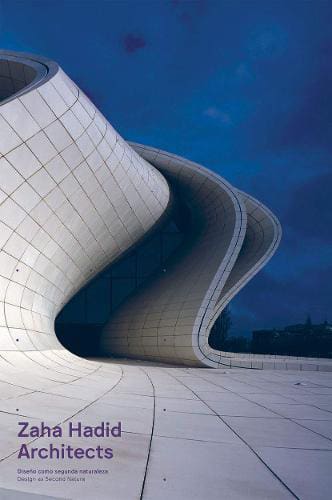
Designed by the late Zaha Hadid and completed in 2012, the Heydar Aliyev Center is perhaps the most refined expression of blob architecture’s potential. Its white, wave-like surface flows seamlessly from plaza to roof to wall, erasing the traditional distinction between building and ground.
The structure’s curves are not arbitrary – they symbolise openness and the fluid cultural identity of Azerbaijan. Inside, the sweeping forms continue, guiding visitors through exhibitions and performance spaces without abrupt visual breaks. The building embodies the fusion of organic inspiration and parametric precision that defines Blobism at its highest level.

Cultural Theory Behind Organic Architecture
Blobism is deeply tied to the concept of organic architecture, first championed by Frank Lloyd Wright, but it takes the idea into the digital era. Rather than simply mimicking nature, blob architects simulate natural growth patterns, fluid mechanics, and morphogenetic processes.
Cultural theorists link blobism to a postmodern condition – a rejection of rigid modernist grids in favour of fluidity, hybridity, and multiplicity. In an age defined by globalisation and digital connectivity, blob architecture reflects a world that is constantly shifting, networked, and adaptive.
It also engages with biomimicry – the design discipline that takes cues from nature’s efficiency. From cellular structures to coral reefs, blob buildings often echo the shapes and systems that have evolved over millions of years, suggesting a deep harmony between technology and biology.
Blobism Today and Its Future
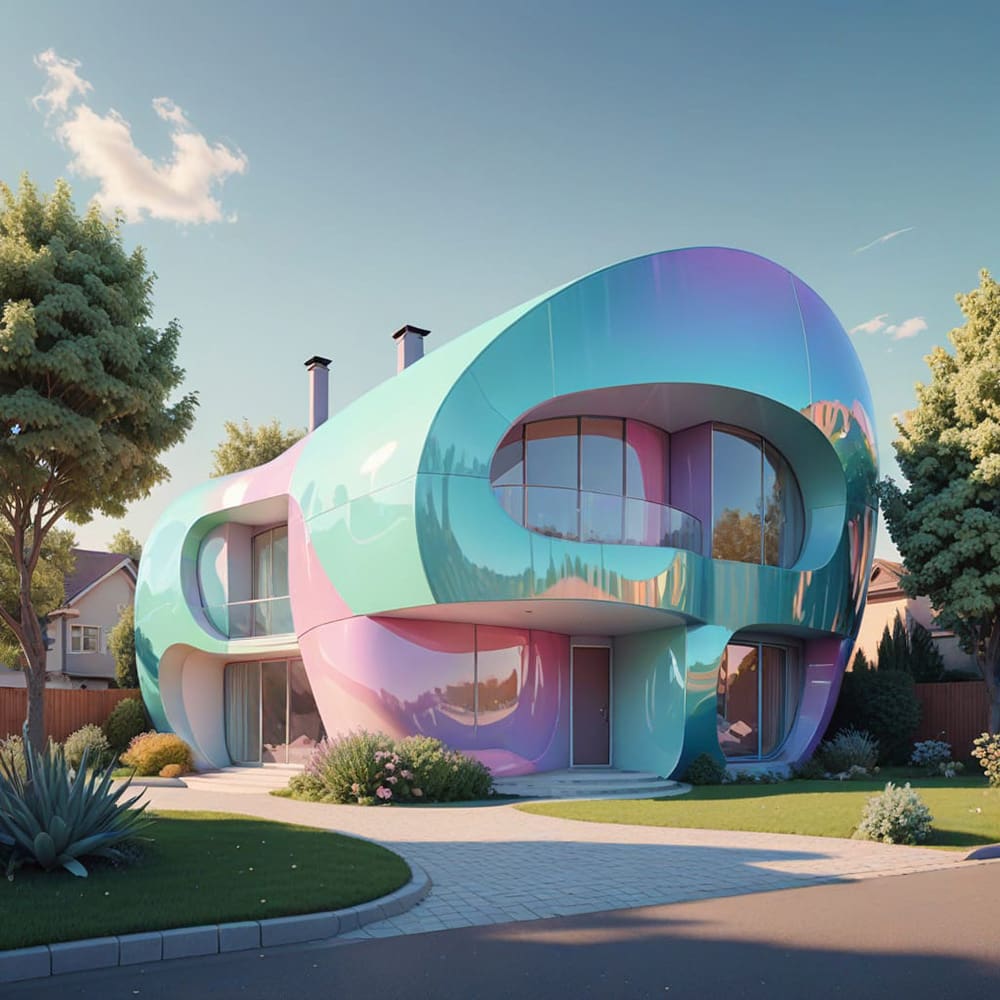
Blobism has matured from a provocative niche to a legitimate architectural approach, especially in civic and cultural buildings. Today’s blob designs often merge with sustainable architecture, using their forms to optimise light, ventilation, and water collection.
Looking ahead, AI-assisted design and VR-based spatial modelling will push Blobism further. Architects will be able to test fluid designs in immersive environments, simulate environmental performance instantly, and 3D print entire structural elements.
Far from a passing trend, Blobism’s integration of digital freedom, organic inspiration, and cultural symbolism suggests it will remain a defining language in 21st-century architecture.

Blobism’s legacy in contemporary architecture
Blobism stands at the crossroads of art, architecture, and technology. Born from the possibilities of digital design, it broke architecture free from the tyranny of the straight line, allowing buildings to flow, breathe, and adapt like living things. Its most striking examples – from the Selfridges Building to the Heydar Aliyev Center – show that when technology serves imagination, the built environment can become as fluid and dynamic as the cultures it serves.
In the decades ahead, as digital tools grow even more powerful and sustainability becomes ever more urgent, Blobism’s fusion of organic form and technological precision will ensure it remains one of the most forward-looking – and human – architectural movements of our time.
Read our full articles on the complete guide to major art movements from 1850 to now, the Minimalism Movement – art, design and the power of less and art as political and cultural expression.
“The computer didn’t invent these forms – it simply gave us the means to realise them.”
Greg Lynn
JOIN THE PVS READERSHIP

Browse 1000’s of Books in Our Pen vs Sword Books Bookshop
About the Author
We write image rich articles about Today's Questions and Events that have Shaped Us. Deep Dives into Artists, Wordsmiths, Thinkers and Game Changers. It's Mightier When You Think!








Post Comment