
About the Author

We write image rich articles about Today's Questions and Events that have Shaped Us. Deep Dives into Artists, Wordsmiths, Thinkers and Game Changers. It's Mightier When You Think!




How Empires, Money and Stories Rule the World
Power has always disguised itself as order. It hides behind flags, in boardrooms, in the precise language of bureaucracy and the discreet silence of a well-timed leak. We notice it most when it fails – when governments collapse, currencies tumble, or the lights go out.
Yet, as the historian Timothy Snyder has often observed, the anatomy of power is most visible not in moments of rupture but in the routines that sustain it: the laws we obey without question, the narratives we accept as truth and the hierarchies that feel natural because they have always been there.
From empires to algorithms, we discuss The Architecture of Power and examine how authority manifests – in systems, language and society. Referencing books and authors from our Pen vs Sword Books Bookshop ‘Power’ bookshelf, we explore the enduring dynamics of influence, control and resistance in both history and today’s geopolitics.
For further analysis of Language, Media & Truth and how narratives, platforms and power shape public meaning, explore related Pen vs Sword articles.
“Journalism is the first casualty of war and the last defence of freedom.”

John Pilger
All of our content is free to access. An independent magazine nonetheless requires investment, so if you take value from this article or any others, please consider sharing, subscribing to our mailing list or donating if you can. Your support is always gratefully received and will never be forgotten. To buy us a metaphorical coffee or two, please click this link.
Table of Contents
From Page to Object
This article inspired something physical. View in the Propaganda Department.
City Gent Print | Control Framed Print | Save Democracy Print | Propaganda Department
*All Book Images Open a New tab to our Bookshop
**If you buy books linked to our site, we get 10% commission from Bookshop.org, whose fees support independent bookshops.
The Weight and Shape of Power
To study power is to study both architecture and atmosphere. It is the design of institutions and the invisible air that fills them. Reading through the works our Power bookshelf – from Ece Temelkuran’s meditations on populism to John Pilger’s investigations of imperial deceit—one begins to see that power is not only about who governs, but about who tells the story of governance. It is not simply force, but also persuasion; not only wealth, but also belief.
Today, as democracies wobble and new empires emerge in the algorithmic shadows, the question is no longer who holds power, but how it circulates – and whether it can still be held to account.
Theories of Power – From Hobbes to Hidden Hands
Political thinkers have long treated power as a problem of control. For Thomas Hobbes, it was a necessary monster – the Leviathan – whose authority kept chaos at bay. For Michel Foucault, power was diffuse, embedded in knowledge systems, hospitals, schools, prisons: the invisible mesh shaping how we think and behave. Yet modern readers find something equally unsettling in Brian Klaas’s exploration of why power corrupts. His argument is almost biological: power selects for certain personalities, magnifying their worst traits while insulating them from consequence.
If Foucault taught us to see power everywhere, Klaas shows us why it is rarely benevolent. And as Howard Zinn reminded us in A People’s History of the United States, it is equally crucial to trace power from below – to listen for the murmur of resistance beneath the rhetoric of rulers. Zinn’s narrative method remains radical: history told not through presidents and generals but through workers, women, dissidents, and dreamers. Power, he suggested, is not only seized – it is withheld, refused, sabotaged.
To understand today’s geopolitical currents, we need both perspectives: the structural and the insurgent. Power resides in states and corporations, but also in the capacity of ordinary citizens to withdraw consent. The invisible line between domination and defiance is drawn, redrawn, and contested every day.
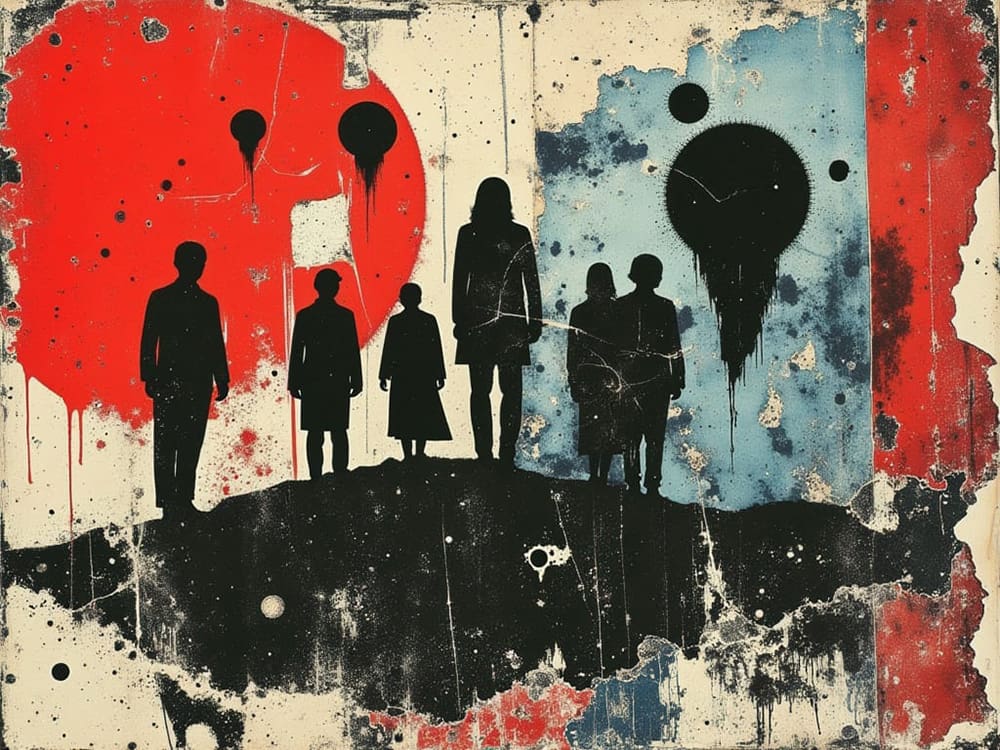
"Post-truth is pre-fascism."

Timothy Snyder
Empires, Coups and Covert Action – The Cold War’s Secret Library
Every age has its archives of betrayal. The Cold War, that long twilight of espionage and ideology, remains one of the richest. Charlie English’s The CIA Book Club reveals a world where culture was weaponised: the Agency secretly funded writers’ conferences, literary journals, even art exhibitions – all to win the battle for the Western mind. The weapon wasn’t the gun but the novel, the essay, the idea.
In Oscar Guardiola-Rivera’s Story of a Death Foretold, the coup in Chile in 1973 becomes a morality play about empire’s reach: how an elected socialist government could be crushed beneath the weight of a foreign agenda. These histories resonate now because their methods persist. Covert influence is no longer the domain of spies with briefcases, but of consultants, think tanks, and private contractors operating through deniable networks. The digital world has simply refined the art of plausible deniability.
From Iran in 1953 to Ukraine in 2014, the choreography of interference repeats itself: economic pressure, disinformation, the cultivation of local proxies. Reading these books today, we recognise the fingerprints on current headlines. Power never disappears – it mutates, moving from embassy to algorithm, from coup plot to cyber-attack.

Neoliberalism, Capital and the Corporate Capture of Politics
If the 20th century was shaped by ideology, the 21st has been shaped by capital. Tom Burgis’s Cuckooland and Mark Curtis’s forensic histories of British foreign policy reveal the same pattern: money flowing through secrecy jurisdictions, politicians orbiting oligarchs, public institutions hollowed out by private interests.

Neoliberalism’s quiet coup, as David Harvey once put it, was cultural as much as economic. It redefined citizenship as consumerism, dismantled public accountability, and transformed governments into risk managers for capital. The result is a strange inversion of democracy: states dependent on corporations they are supposed to regulate.
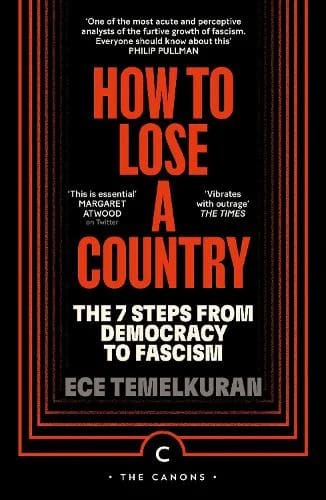
In Silent Coup, Matt Kennard details how elites used the global financial system to launder both money and legitimacy, while in How to Lose a Country, Ece Temelkuran maps how populists exploit public despair to seize and entrench power. Her argument is chillingly simple: when citizens lose faith in truth, power no longer needs to hide – it can flaunt itself openly.
Today’s geopolitics is less about territorial conquest than financial architecture. Sanctions, supply chains, and digital currencies are the new front lines. Power has become an ecosystem of influence, with bankers and hedge-fund managers wielding as much clout as generals.
“You can’t be neutral on a moving train.” Howard Zinn
Media, Disinformation and the Manufacture of Consent
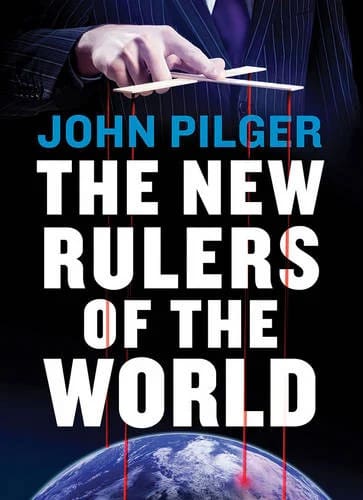
John Pilger once wrote that journalism’s first loyalty is not to power but to the people. Yet as he chronicled in The New Rulers of the World, the modern information order often serves the reverse function: to disguise inequality, to render exploitation invisible.
Mark Curtis’s meticulous Secret Affairs unearths the deep collusion between media narratives and state policy, tracing how intelligence agencies and foreign offices have shaped public discourse for decades. The methods are old; the platforms new. Social media now performs, at scale, what Cold War propaganda once did by stealth. Algorithms learn our fears and feed them back as confirmation; outrage becomes a commodity, disinformation a business model.
The result is a new economy of attention where power operates less by censorship than by saturation. Truth is drowned in noise. The modern propagandist doesn’t silence the critic – they flood the room until no one can hear.
This, too, is a form of soft authoritarianism: a world where we consent to our manipulation because the feed never stops refreshing.
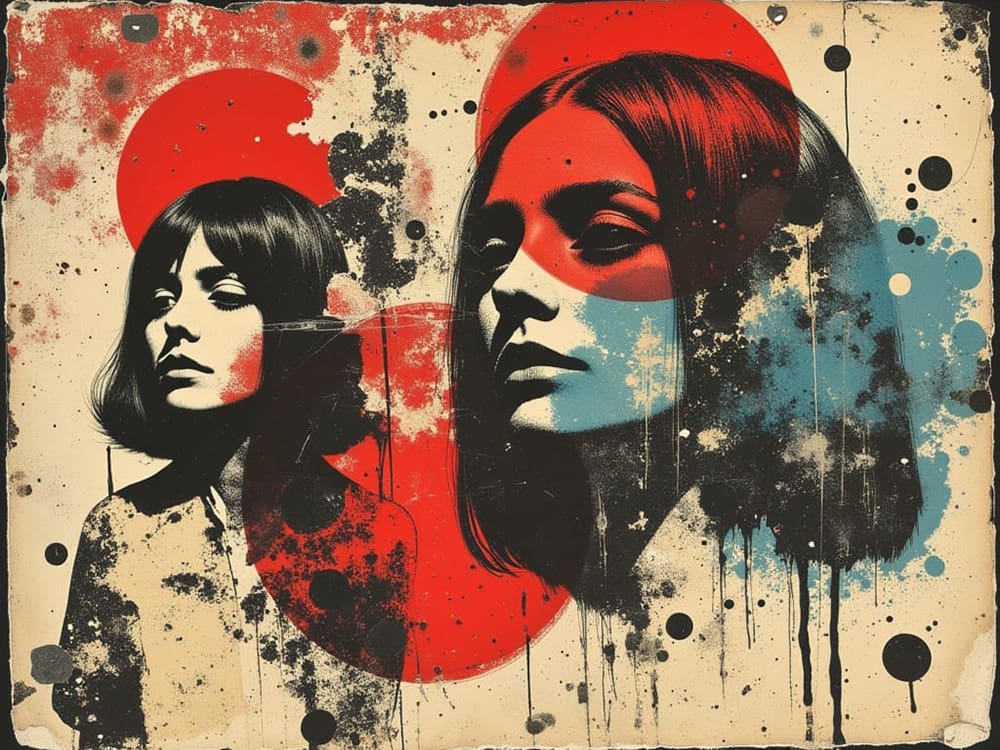
"The real secret of statecraft is not secrecy - it’s forgetting."

Mark Curtis
Authoritarianism, Populism and the New Technologies of Control
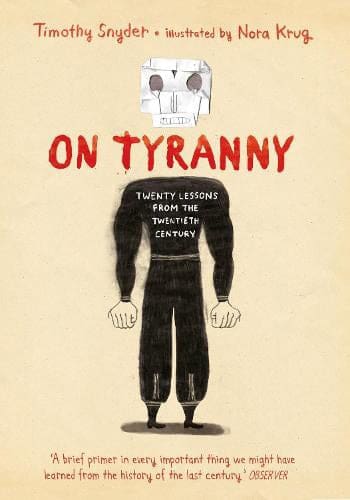
Timothy Snyder’s On Tyranny reads today like a handbook for survival. Written in the wake of democratic backsliding across Europe and America, it lists practical steps for resisting the slide into autocracy: defend institutions, beware paramilitaries, believe in truth. Snyder’s warning is not historical nostalgia – it is contemporary reportage. The tactics of modern authoritarianism are algorithmic, incremental, and perfectly legal.
Ece Temelkuran extends the diagnosis in her own work: fascism, she argues, no longer arrives with boots and banners but with laughter and memes. It thrives on irony, weaponising disillusionment. The new strongmen – Orban, Erdoğan, Modi and Putin – rule by narrative as much as by decree. They colonise the imagination first.
Technology amplifies their reach. Surveillance systems record dissent before it becomes protest; artificial intelligence predicts rebellion before it happens. Social media, once hailed as a tool of liberation, has become an instrument of control.
Yet there is resistance in visibility. Whistle-blowers, journalists and artists continue to expose the architecture of manipulation. The fight is no longer for freedom of speech but for freedom of attention – the ability to see clearly in a landscape of engineered distraction.
Oil, Arms and the Geopolitics of Resource Power
Bradley Hope and Justin Scheck’s Blood and Oil reads like a corporate thriller yet reveals a fundamental truth of modern power: energy still dictates empire. Their portrait of Mohammed bin Salman captures a new archetype – the petro-prince as tech visionary, wielding both oil wealth and Silicon Valley ambition.
Resource politics remains the skeleton of world order. From the scramble for lithium in Latin America to the battle for gas pipelines in Eastern Europe, control over extraction and energy routes determines diplomacy.
Weapons follow wealth. The arms trade – another shadow network – creates dependencies that outlast wars. Governments sell to regimes they later condemn, then rebuild what they helped destroy. In this ouroboros of conflict and profit, morality is a line item on a balance sheet.
Environmental collapse adds a final twist: as the planet warms, resource scarcity fuels new conflicts and migrations. Power is once again measured in barrels and batteries. The geopolitics of the future is green only in rhetoric; in practice, it remains extractive, unequal, and violent.
“When people stop believing in truth, power no longer hides – it performs.” Ece Temelkuran
Resistance, Accountability and the Politics from Below
Against this architecture of domination, the question arises: where does resistance live? Howard Zinn believed that history’s real power resided in ordinary people refusing to obey. That belief animates the contemporary movements chronicled by writers from across the Power list – activists, whistle-blowers, and journalists who risk their safety to expose the system’s inner workings.
In Emergency Sex, Kenneth Cain and his co-authors describe the moral ambiguities of humanitarian intervention, showing how even the machinery of aid can replicate the hierarchies it claims to dismantle. Yet they also remind us that individual acts of courage – speaking out, documenting truth – can pierce institutional inertia.
Grassroots activism, from climate strikes to anti-corruption campaigns, continues to challenge concentrated power, often using the same technologies that surveil them. The paradox of our era is that the digital tools built to monitor us also connect us. Hashtags become movements; leaks become revolutions.
Resistance today is as much about storytelling as protest. To narrate injustice is to puncture its inevitability. In the end, accountability begins with visibility – someone deciding that silence is no longer an option.
The Moral and Legal Architecture of Power
Legitimacy is the quiet foundation of power. Without it, regimes rule through fear; with it, they can persuade, manipulate, and endure. International law was meant to regulate this moral economy, yet as countless histories attest—from Oscar Guardiola-Rivera’s Chile to Pilger’s Iraq – it often functions as theatre, invoked selectively by the powerful.
Still, the aspiration matters. Transitional justice, truth commissions, and the slow labour of historical reckoning remain essential antidotes to impunity. Power may rewrite the present, but memory resists revision. In the testimonies of victims, the archives of journalists, the murals of protest movements, a counter-history persists.
John Sweeney’s reporting from North Korea captures this tension between spectacle and truth: a state that maintains control through myth, yet cannot fully extinguish the human impulse toward witness. Power depends on forgetting; justice, on remembering.

Reading Power, Acting in the World
Reading these books together feels less like studying history than decoding the present. They reveal power not as a single structure but as a network of dependencies – political, financial and psychological. Empires no longer need colonies; they own supply chains. Censorship no longer burns books; it floods timelines. Propaganda no longer shouts; it whispers, in personalised ads and micro-targeted fear.
Yet these same books remind us that power is never absolute. It is contested in every courtroom, newsroom, classroom and street. To read critically is to resist passively accepting the world as given. Knowledge itself becomes an act of citizenship.
If the architecture of power is vast, so too is the architecture of conscience. Pilger’s investigations, Snyder’s warnings, Zinn’s faith in collective action, Temelkuran’s fierce clarity – they all insist that awareness must become engagement. The stories we tell about power can either entrench it or expose it.
In the end, the lesson is simple and enduring: Power thrives in silence. The task of our age is to keep speaking.
JOIN THE PVS READERSHIP
Browse 4000+ Books in Our Pen vs Sword Books Bookshop
About the Author
We write image rich articles about Today's Questions and Events that have Shaped Us. Deep Dives into Artists, Wordsmiths, Thinkers and Game Changers. It's Mightier When You Think!






Post Comment