About the Author

Pen vs Sword is an independent magazine publishing long-form cultural criticism, art history and political analysis. We write about artists, movements, thinkers and ideas - from Peter Kennard to Hurufiyya, from the Suffragette movement to the French Revolution. Free to read, independently published.




AI – the Divided Promise of Tomorrow
Artificial intelligence is everywhere – writing our emails, recommending our news, transforming industries from medicine to manufacturing. We’re told it will reshape the world as profoundly as electricity or the internet once did. But amid the excitement, there’s a quieter, more uncomfortable truth: this future isn’t arriving equally. While well-funded nations and tech giants race ahead, vast parts of the world remain disconnected – not just from the technology itself, but from the education, infrastructure, and political power needed to shape it.
Here we ask a simple but urgent question: who is the AI revolution really for?
We’ll explore the real-time impacts of AI in developed societies and the barriers facing emerging nations, where access is limited and exploitation is common. We’ll also look at efforts to close the gap and build a more inclusive future – but not without first confronting the deep structural inequalities being hard-coded into our digital age.
Read out article Women in Science – whose future gets imagined depends on who imagines it.
For more articles exploring Future Imaginaries, cultural futures and emerging power structures, read related articles on Pen vs Sword.
“Algorithms will make mistakes. Algorithms will be unfair. That should in no way distract us from the fight to make them more accurate and less biased.”
Hannah Fry
All of our content is free to access. An independent magazine nonetheless requires investment, so if you take value from this article or any others, please consider sharing, subscribing to our mailing list or donating if you can. Your support is always gratefully received and will never be forgotten. Click here to buy us a metaphorical coffee or two.
Table of Contents
From Page to Object
This article inspired something physical. View in the Propaganda Department.
For A Better World T-shirt | Solidarity Print | Propaganda Department
*All Book Images Open a New tab to our Bookshop
**If you buy books linked to our site, we get 10% commission from Bookshop.org, whose fees support independent bookshops.
Introduction: A Tale of Two Worlds
Artificial Intelligence is no longer a far-off fantasy. It’s here – woven into the daily fabric of life for millions in the world’s wealthiest nations. From voice-activated assistants to AI-powered cancer detection tools, the pace of technological change in advanced economies is dizzying. Governments are drafting AI policies, corporations are embedding it into business models, and headlines regularly proclaim that “AI will change the world.” But will it?
Look beyond Silicon Valley, Shanghai, or Stockholm, and a different reality emerges – one where power outages are daily occurrences, where smartphones are rare, and where data costs eat up a third of a family’s monthly income. In these parts of the world, talk of AI’s great transformation feels abstract, even absurd.
This is the paradox of the AI era. We are told that artificial intelligence will reshape our collective future – but the truth is, for much of the world, that future may not arrive anytime soon. As AI races ahead in high-income countries, low- and middle-income nations risk being left further behind. And that’s not just a matter of technology – it’s a matter of global justice.
AI has become the new arms race
– only this time, the weapon is intelligence itself.
The Promise in High Places
In developed societies, the promise of AI is tangible. It’s powering self-driving cars in California, automating complex logistics networks in Germany, and analysing MRI scans in Japan with superhuman accuracy. In hospitals, AI diagnostics are helping detect early signs of breast cancer and retinal disease faster and more accurately than ever before. In finance, algorithms spot fraud in real time and adjust portfolio strategies at lightning speed.
Even education, long considered a stubbornly analogue field, is seeing transformation. Adaptive learning platforms use AI to tailor lessons to each student’s pace and style. Universities are experimenting with AI teaching assistants that answer student queries instantly and track learning outcomes over time.
The economic upside is enormous. According to global consultancy McKinsey, AI could deliver an additional $13 trillion to the global economy by 2030 – and the lion’s share of that growth will likely go to the countries already investing heavily in infrastructure, research, and talent. Nations like the U.S., China, the U.K., South Korea, and Germany are staking claims in this new gold rush. AI has become the new arms race – only this time, the weapon is intelligence itself.

The Global South’s Unequal Starting Line
Meanwhile, in many low-income countries, the tools and systems needed to build AI capacity simply aren’t in place. You can’t deploy machine learning in a hospital if that hospital doesn’t have electricity. You can’t run cloud-based models if internet access is patchy, slow, or prohibitively expensive. And you can’t train a generation of AI researchers if computer science departments don’t have the hardware, funding, or faculty to support them.
Consider this: just 27% of people in low-income countries have regular access to the internet. In wealthier countries, that number jumps to over 90%. The cost of data in parts of sub-Saharan Africa can consume up to 31% of a person’s income, compared to just 1% in much of Europe. AI models also require powerful graphics processing units (GPUs) and servers – yet Africa owns only 0.04% of the world’s top computing resources. In many African nations, the price of a single GPU exceeds 70% of a citizen’s annual income.
That gap doesn’t just slow progress – it sets up a dangerous feedback loop. Without infrastructure, you can’t build capacity. Without capacity, you can’t develop localized AI solutions. And without those, you’re forced to rely on imported tools that may not fit your needs – or worse, may reinforce existing inequalities.

Small Wins, Big Meaning
Yet despite these structural challenges, many countries in the Global South are finding ways to harness AI on their own terms – often with striking results.
In India, the Wadhwani Institute for Artificial Intelligence is using machine learning to fight agricultural pests and reduce crop losses. Their tool, designed for low-literacy users, uses smartphone cameras to identify infestations and recommend action, helping smallholder farmers protect their livelihoods.
In Malawi, a low-cost AI tool analysing fetal heart rates in under-resourced clinics led to an 82% reduction in stillbirths and neonatal deaths. That’s not some distant promise – it’s AI literally saving lives today, even in places without robust health infrastructure.
In Togo, an AI-driven cash transfer program helped the government identify vulnerable households more accurately and efficiently during the COVID-19 pandemic. Traditional aid programs might have missed these families altogether; the AI system, based on satellite imagery and mobile data, filled in the gaps.
These examples show that the potential is there – but they are the exception, not the rule. Most low-income nations lack the resources to develop or scale such projects on their own. And even the best local innovations often hit a wall when it comes to infrastructure or policy support.

Language, Culture, and Control
Another rarely discussed inequality in the AI space is language. Most major AI models today are trained primarily in English, Chinese, or a handful of European languages. That means billions of people who speak African, Indigenous, or regional languages are effectively locked out of the AI conversation – both as users and as data contributors.
Recently, companies like Orange have taken steps to correct this imbalance. In collaboration with OpenAI, the telecom giant is investing in African language support across a range of generative AI tools. By working directly with linguists and local institutions, they’re training models that understand the context, idioms and nuance of languages like Swahili, Wolof, and Hausa. Crucially, these models are being made available free of charge to public institutions – giving health ministries, educators, and local governments access to world-class tools in their own languages.
It’s a promising step, but it also underscores how dependent much of the world still is on a small number of tech giants. When access to AI comes only through a few platforms based in Silicon Valley or Shenzhen, cultural sovereignty becomes fragile. Who decides what data matters? Whose priorities shape the algorithms? And who reaps the economic benefits of these tools?

Education: The Great Equalizer?
Building local AI capacity isn’t just a matter of infrastructure – it’s a matter of education. Across the Global South, there’s a growing recognition that the future workforce must include not just users of AI, but builders. But training AI scientists, developers, and data engineers is no small feat. Read Women in Science – whose future gets imagined depends on who imagines it.
Organizations like Tech Herfrica in Nigeria are taking a community-first approach. By offering digital literacy programs specifically for rural women, they are helping participants access mobile banking, business tools, and information that were previously out of reach. Their approach goes beyond teaching how to use apps – it’s about fostering long-term digital confidence, which in turn strengthens economic agency.

In schools and universities, partnerships with international institutions are helping to bridge the education gap. In Kenya and Rwanda, for instance, students are now accessing AI courses developed in collaboration with MIT and Stanford – offered in formats that account for limited bandwidth and access to hardware.
And in rural India, initiatives like Digi-Wise are using low-data AI chatbots to support children’s learning in local languages and dialects, especially in communities where qualified teachers are scarce. These systems are designed to be adaptable, culturally relevant and light on infrastructure requirements – a powerful combination.
Still, these programs need scale. A few thousand trained individuals won’t be enough to build national ecosystems. What’s needed is investment in full pipelines – from basic digital literacy to advanced research labs. That requires not only funding, but policy vision.
The Danger of a Two-Tier World
What we’re witnessing is the emergence of a two-tier future: one in which AI dramatically enhances productivity, health, and quality of life in a handful of countries, while leaving the rest to navigate a landscape they had no role in shaping. The gap could deepen existing inequalities not just between countries, but within them – between urban and rural areas, between rich and poor, between those who speak a dominant language and those who don’t.
And that’s not just a technological issue – it’s a geopolitical one. As AI increasingly drives everything from global trade to military strategy, those left behind could see their economic sovereignty eroded. Low-income countries may become data extraction zones for foreign tech companies, or passive consumers of tools that don’t fit their needs, values, or systems.
It’s not inevitable. But it is the path we’re on.
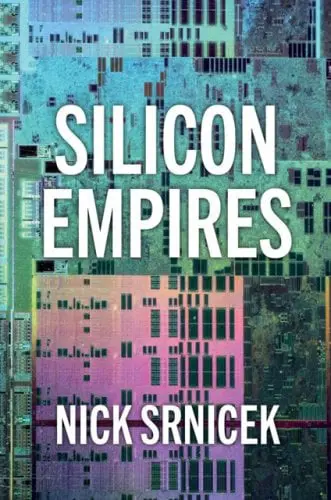
“Models are opinions embedded in mathematics.”
Cathy O’Neil
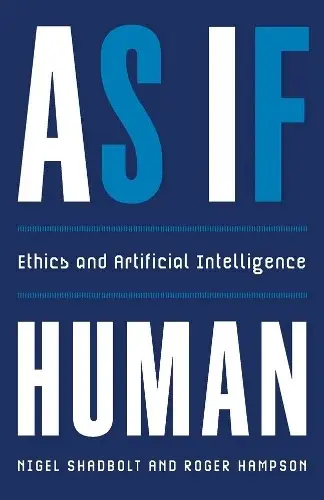
Toward a Better Balance
If we want a world where AI uplifts rather than divides, we must act deliberately to shape it. That starts with investment – in infrastructure, yes, but also in people. High-income nations and tech corporations must recognize their role in funding capacity-building across the Global South – not out of charity, but from an understanding that global inequality is a risk to everyone, including themselves.
We also need stronger international cooperation. The idea of a Global AI Fund, modelled on climate financing, is gaining momentum. Such a fund could support everything from broadband expansion to AI curriculum development in under-resourced regions. Equally important is the need for open-source, locally trained AI models that prioritize community needs and cultural relevance, rather than profit or convenience.
Perhaps most important is the principle of agency. AI should not be something done to the Global South – it should be something created with and by those who live there. That means including local voices in global discussions on AI ethics, safety, and governance. It means building institutions that reflect diverse priorities. And it means rejecting the notion that a universal model of AI will work everywhere.
The AI age is not inevitable. It is still being built. The question is: who gets a seat at the table, and who’s left knocking on the door?
Certainly – here’s the concluding section that follows naturally from the rest of the piece, bringing thematic closure while offering a forward-looking reflection:
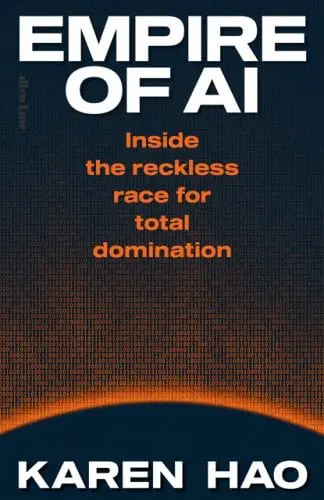
A Crossroads in AI’s Future
We are standing at a pivotal moment in history – where choices about algorithms, access, and agency will shape not only how we live, but who thrives and who is left behind.
Artificial Intelligence has the potential to become one of the most transformative forces humanity has ever unleashed. In the best-case scenario, it could help us solve global challenges, from climate change to disease eradication to food insecurity. It could expand educational access, make healthcare more efficient, and allow workers everywhere to spend less time on drudgery and more time on creativity, care, and community.
But none of those outcomes are guaranteed. The idea that the world will uniformly change for the better with the advent of AI is not only simplistic – it’s dangerous. It overlooks the harsh realities of unequal infrastructure, geopolitical dynamics, and digital colonialism. It assumes that “change” is universally positive and evenly distributed, when in truth, disruption without access can deepen marginalization.
The coming decades will test not just our technological prowess, but our collective will to ensure that innovation serves everyone. The digital divide is not a natural state of things – it is a product of choices, policies, and priorities. We can choose to correct it. Or we can choose to ignore it – and face the social, economic, and political fractures that will inevitably follow.
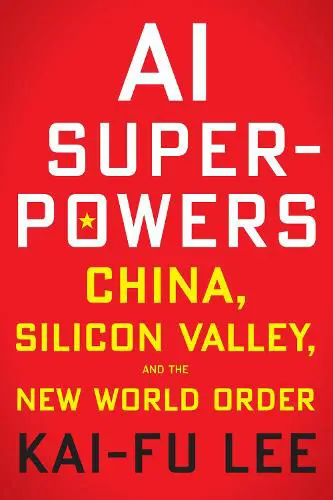

Global development in the age of AI must be grounded in inclusion. Not in platitudes about lifting all boats, but in real, material investments in local ecosystems, local languages, and local leaders. It must acknowledge the unevenness of the playing field, and commit to levelling it – not with hand-outs, but with partnerships.
As AI becomes more embedded in the systems that govern our lives, we must ask ourselves hard questions: Who gets to decide how it’s used? Who gets to benefit? And who gets to resist it when it harms?
There is still time to forge a better, fairer, more human-cantered path forward. But only if we stop assuming that AI will inevitably change the world – and start working to ensure that it changes the world for the better, and for everyone.
Read more of our Pen articles: Women in Science – whose future gets imagined depends on who imagines it, Future Imaginaries – the full context for this question and Resistance and Solidarity.
“Over the years, I’ve found only one metaphor that encapsulates the nature of what these AI power players are: empires.”
Karen Hao
JOIN THE PVS READERSHIP
Browse 1000’s of Books in Our Pen vs Sword Books Bookshop
About the Author
Pen vs Sword is an independent magazine publishing long-form cultural criticism, art history and political analysis. We write about artists, movements, thinkers and ideas - from Peter Kennard to Hurufiyya, from the Suffragette movement to the French Revolution. Free to read, independently published.
















Post Comment