
About the Author

Pen vs Sword is an independent magazine publishing long-form cultural criticism, art history and political analysis. We write about artists, movements, thinkers and ideas - from Peter Kennard to Hurufiyya, from the Suffragette movement to the French Revolution. Free to read, independently published.



From Aaron Swartz to Julian Assange, from the Pirate Bay to social media censorship – the digital corporations that now govern public life
What’s the connection between Big tech and democracy? There is a new form of power in the world, and it does not look like power. It looks like a search engine, a social network, a shopping platform, a mapping application. It is frictionless, convenient, and mostly free at the point of use. It presents itself as neutral, as infrastructure, as utility, as simply the way the modern world works. But the companies that own it are among the most powerful political actors in human history, and the decisions they make about what content circulates, whose speech is amplified or suppressed, what data is collected and how it is used shape the conditions under which democracy itself is possible.
This is not a new concern. It has been articulated, with increasing urgency, by technologists, journalists, activists and politicians for at least two decades. What has changed is the scale: the five largest technology companies are now worth more than the GDP of most countries, employ millions of people, and mediate the information environment of billions. Understanding what that means for democracy and for the distribution of power, for the conditions of public speech, for the capacity of citizens to organise against those who govern them, is one of the most important political tasks of the present moment.
The articles gathered in this cluster approach these questions from multiple directions: the fate of those who have challenged the digital status quo, the economics of the surveillance system, the politics of platform censorship, and the broader question of who owns the digital commons.
For further analysis of Language, Media & Truth and how narratives, platforms and power shape public meaning, explore related Pen vs Sword articles.
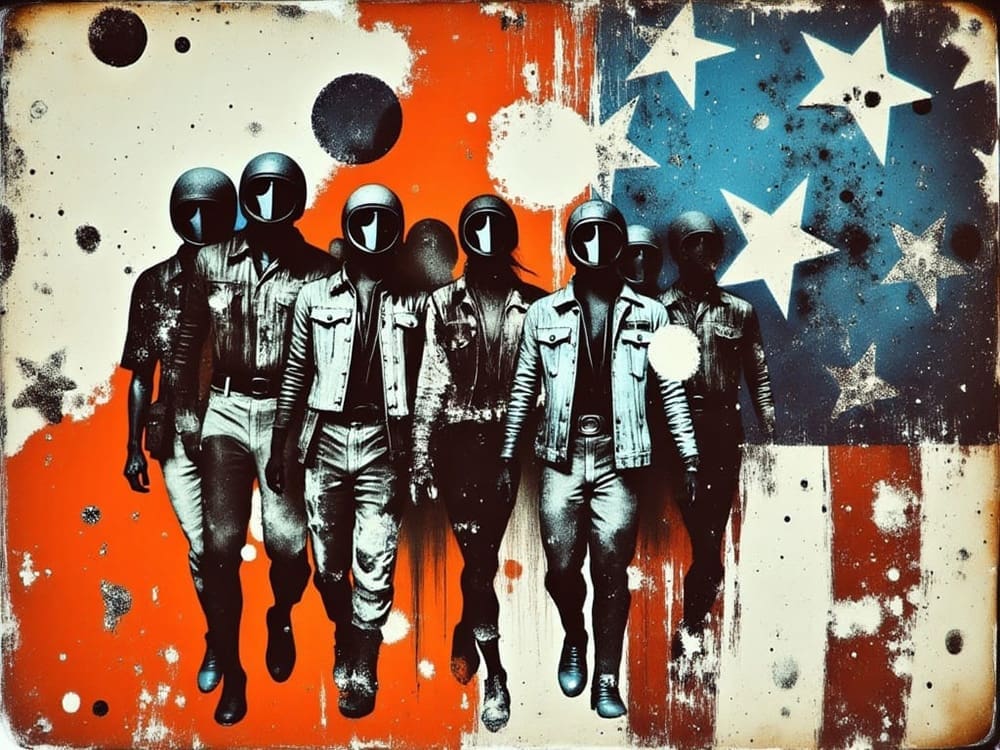
"Information is the currency of democracy."

Thomas Jefferson
All of our content is free to access. An independent magazine nonetheless requires investment, so if you take value from this article or any others, please consider sharing, subscribing to our mailing list or donating if you can. Your support is always gratefully received and will never be forgotten. To buy us a metaphorical coffee or two, please click this link.
Table of Contents
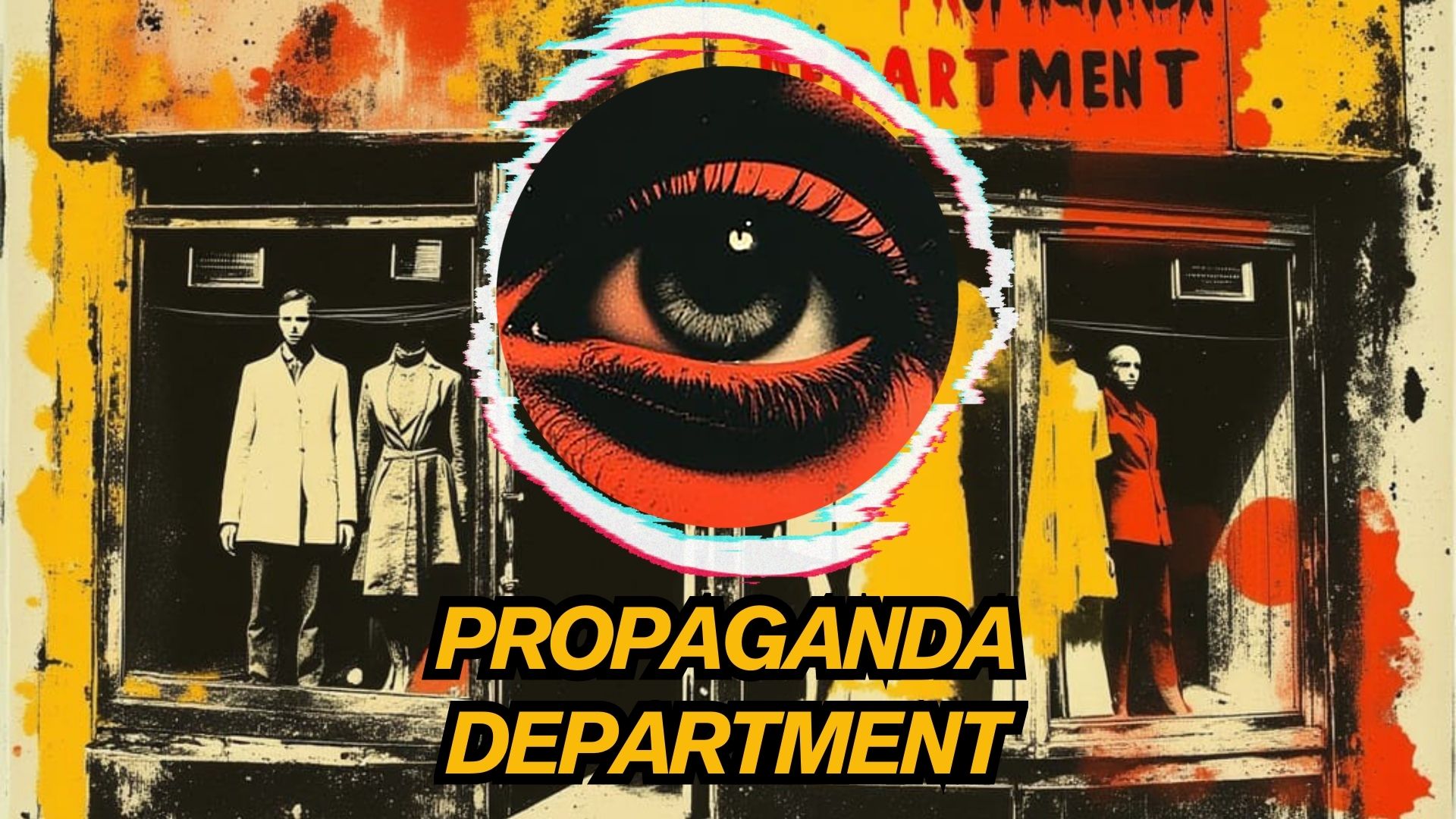
From Page to Object
This article exists as a physical thing. View in the Propaganda Department.
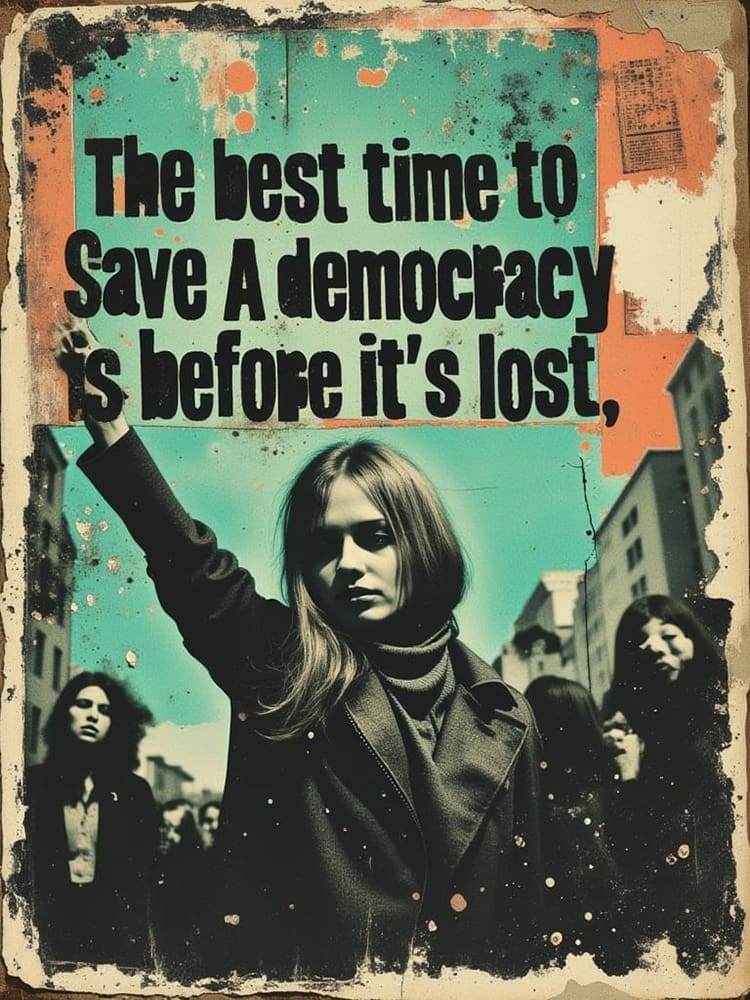
How Big Tech became power – the rise of platform capitalism
The concentration of economic and political power in a handful of technology companies has happened with extraordinary speed. In 2004, Google and Facebook barely existed as public entities. By 2024, the combined market capitalisation of Google, Apple, Microsoft, Amazon and Meta exceeded fifteen trillion dollars which is more than the GDP of every country in the world except the United States and China.
This is not simply an economic development. It is a political one: the largest concentration of private power since the industrial monopolies of the nineteenth century, and one that has emerged in a regulatory environment spectacularly ill-equipped to understand or constrain it.
The business model that drives this concentration was identified and named by the scholar Shoshana Zuboff as “surveillance capitalism”: the extraction of human behavioural data as raw material, its processing into predictions about future behaviour, and the sale of those predictions to advertisers and other interests who want to influence what people buy, vote for and believe. Read more in our article Big Tech and Surveillance Capitalism – who profits from you?
"Surveillance is the business model of the internet."

Bruce Schneier
What makes this model politically significant (beyond its economic implications) is that it creates an incentive structure in which the platforms are rewarded for maximising engagement, and engagement is most effectively maximised by content that produces strong emotional responses: outrage, fear, disgust. The result is an information environment that systematically amplifies division and extremism, not because anyone decided this was good, but because it is commercially optimal.
The specific ways in which this system operates at the level of content moderation – who decides what can be said, on what basis, by what mechanism – are explored in our article on social media’s double edge: the simultaneous use of the same platforms for political activism and for political surveillance, and the impossible position this creates for anyone trying to use them for progressive ends.

Aaron Swartz and the fight for the digital commons
Aaron Swartz died in January 2013 at the age of twenty-six, having been charged with thirteen federal counts of computer fraud for downloading academic journal articles from the JSTOR database through MIT’s network and making them publicly available. He was facing a potential sentence of thirty-five years in prison and a million-dollar fine. JSTOR, the organisation whose articles he had downloaded, had asked for the case to be dropped. MIT, whose network he had used, had not. The federal prosecutors pressed on.
Swartz had, by any reasonable accounting, contributed more to the digital commons than almost anyone of his generation: he had co-authored the RSS specification at fourteen, helped develop the technical architecture of Creative Commons, contributed to Reddit, and led the successful campaign against SOPA (the Stop Online Piracy Act) that, had it passed, would have given corporations unprecedented power to censor the internet. He was prosecuted not because what he had done was wrong in any conventional sense, but because he had challenged the property relations that underpin the information economy.

His case raises questions that go far beyond his individual story. If publicly funded academic research cannot be made publicly available without criminal prosecution, what does that say about the relationship between knowledge and power? If the penalty for challenging the enclosure of the digital commons is thirty-five years in prison, what does that say about who the law is designed to protect?
Swartz understood the political stakes better than most. He wrote, in his Guerilla Open Access Manifesto, that “information is power” and that “sharing isn’t immoral – it’s a moral imperative.” The system that prosecuted him disagreed.
"Whoever controls the media, controls the mind."

Jim Morrison
The Pirate Bay and the long war over information freedom
The history of the Pirate Bay – from its founding in Stockholm in 2003 through its prosecution, the imprisonment of its founders, its continued operation through mirror sites and the constant game of legal whack-a-mole with rights holders, traces the same battle on a larger canvas. The Pirate Bay was never simply about the free distribution of copyrighted material, though it was that. It was about the question of who controls the infrastructure of information, and on whose terms.
The entertainment and publishing industries that pursued the Pirate Bay’s founders understood something that the mainstream commentary on the case often missed: this was not primarily a dispute about intellectual property. It was a dispute about power. The internet, in its original conception, was a decentralised network in which information could flow freely between any two points.
The history of the past two decades has been the history of the re-centralisation of that network: the concentration of information flows through a small number of platforms, each of which can be regulated, monetised, and used to shape what its users see, say and believe. The Pirate Bay was one of many expressions of resistance to that re-centralisation.
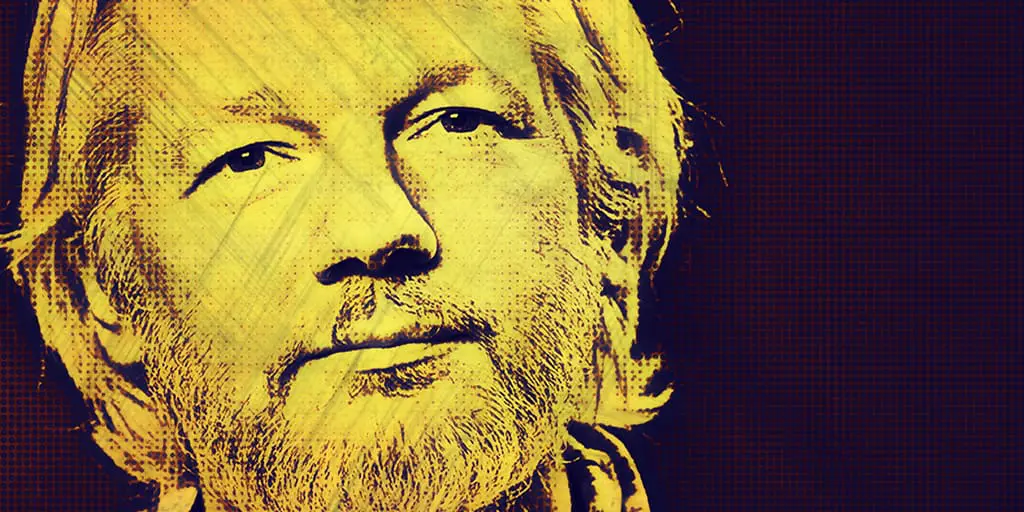
Julian Assange and the limits of press freedom in the digital age
The case of Julian Assange is the most consequential press freedom case of the twenty-first century. WikiLeaks, which Assange founded, published classified material on a scale and with a political impact that no previous publisher had achieved: the Iraq War Logs, the Afghan War Diary, the US diplomatic cables, and (most famously) the Collateral Murder video, which showed a US helicopter crew killing civilians including two Reuters journalists in Baghdad in 2007, and whose release the US government had sought by every available means to prevent.
Assange’s subsequent decade of effective imprisonment, first in the Ecuadorian embassy in London, then in Belmarsh high-security prison, was the state’s response to the question of what happens to those who successfully expose what governments want hidden. The legal framework used to pursue him was the US Espionage Act, which was written in 1917 to prosecute spies, not journalists and has no provision for a public interest defence. If it applies to Assange, it applies to every journalist who has ever published classified material in the public interest: the New York Times, the Guardian, Le Monde.
The case reveals something important about the relationship between big tech and the state: that the same governments that claim to promote internet freedom abroad use it selectively at home, and that the digital infrastructure that enables whistleblowing and investigative journalism is simultaneously the infrastructure that enables the surveillance of those who practise it.
The Collateral Murder video was leaked because digital information can be copied and transmitted at almost zero cost. Assange was surveilled for years inside the embassy because digital information can be intercepted at almost zero cost. The technology is neutral. The power relations that govern its use are not.
The price of liberty is eternal vigilance.
Platform censorship and the politics of content moderation
The question of who decides what can be said on the dominant platforms of public communication is one of the most significant political questions of the present moment, and one of the most poorly understood. Content moderation is the process by which platforms remove, restrict or amplify content and is not a neutral technical function. It is a political act: a decision about what speech is permissible, made by private companies, in the name of community standards that are themselves political positions, applied through systems that are opaque, inconsistent and prone to discriminatory outcomes.
The specific case documented in Pixels of Protest in which a political artwork about Palestine was suppressed by Meta halfway through an advertising campaign, illustrates this with uncomfortable clarity. The question is not whether the platform had the legal right to remove the content. It is what the removal reveals about the political assumptions embedded in content moderation systems, and who those systems systematically silence.
The operant conditioning mechanisms that govern platform design such as the reward loops, the algorithmic amplification, the variable reinforcement schedules that keep users generating data, are not separate from the political consequences of platform power. They are the mechanism through which political consequences are produced at scale, invisibly, in the name of engagement maximisation rather than political choice.
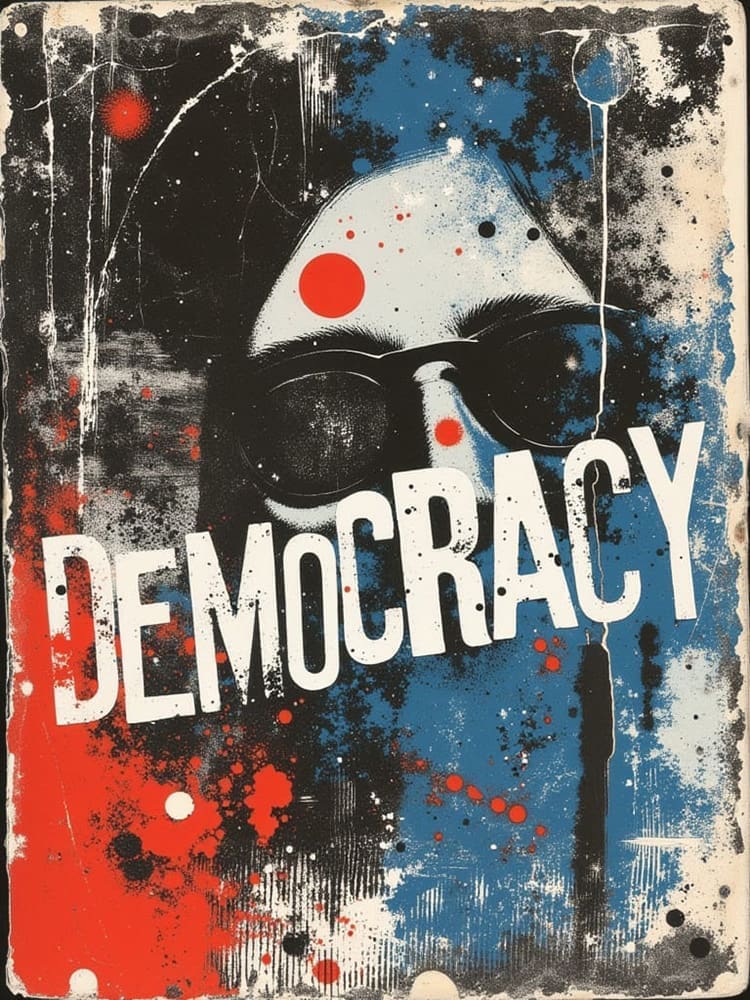
"Technology is neither good nor bad; nor is it neutral."

Melvin Kranzberg
What can be done – regulation, alternatives and resistance
The political and regulatory response to the power of big tech has been inadequate to the scale of the problem. The European Union’s General Data Protection Regulation, the Digital Markets Act, the proposed Digital Services Act: these are significant interventions, but they address the symptoms of platform power rather than its structural causes.
What would address the structural causes is the recognition that the digital infrastructure of public communication is a public good that should be governed in the public interest and not a private resource to be monetised in the interest of shareholders.
The traditions of resistance that have grown up around platform power like Aaron Swartz’s open access activism, the Pirate Bay community, the free software movement, the creative commons all represent different attempts to carve out spaces in the digital world that operate on different principles from surveillance capitalism.
They have not succeeded in reversing the centralisation of digital power. But they have kept alive the argument that the internet could be organised differently, and kept available the tools such as open source software, federated networks, encrypted communications, through which alternative forms of digital life remain possible.
For the broader context of how language and information shape political power, explore our hub on Language, Media and Truth. For the economic structures that underpin platform power, see Culture and Capital. And for the tradition of resistance to surveillance and enclosure, read our accounts of resistance and solidarity in the digital age.
Pen vs Sword Books – Book Recommendations
*All Book Links Open a New tab to our Pen vs Sword Books Bookshop
**If you buy books linked to our site, we get 10% commission from Bookshop.org, whose fees support independent bookshops.
1. The Age of Surveillance Capitalism by Shoshana Zuboff
The definitive account of how digital platforms harvest human behaviour and sell it – essential reading for understanding the political economy of big tech.
2. Aaron Swartz: The Idealist by Justin Peters
The most comprehensive account of Swartz’s life and the political meaning of his prosecution – essential for understanding the stakes of the information freedom debate.
3. No Place to Hide by Glenn Greenwald
Greenwald’s account of the Snowden revelations – the most important documentation of state surveillance in the digital age.
4. The Filter Bubble by Eli Pariser
Pariser’s account of how algorithmic personalisation shapes what we see and what we think – still the most accessible introduction to platform politics.
5. Twitter and Tear Gas by Zeynep Tufekci
The most sophisticated analysis of social media and political organising – essential for understanding both the possibilities and the limits of platform activism.
6. Weapons of Math Destruction by Cathy O’Neil
O’Neil on how algorithms embed and amplify inequality – essential for understanding how technical systems become political ones.
7. Move Fast and Break Things by Jonathan Taplin
Taplin’s account of how Silicon Valley destroyed the cultural industries and concentrated power in the hands of three companies.
8. Who Owns the Future? by Jaron Lanier
Lanier’s argument for why the digital economy needs to be restructured to compensate people for the data they generate.
Whoever controls the media, controls the mind.
JOIN THE PVS READERSHIP
Browse 4000+ Books in Our Pen vs Sword Books Bookshop
About the Author
Pen vs Sword is an independent magazine publishing long-form cultural criticism, art history and political analysis. We write about artists, movements, thinkers and ideas - from Peter Kennard to Hurufiyya, from the Suffragette movement to the French Revolution. Free to read, independently published.






Post Comment