About the Author
Pen vs Sword is an independent magazine publishing long-form cultural criticism, art history and political analysis. We write about artists, movements, thinkers and ideas - from Peter Kennard to Hurufiyya, from the Suffragette movement to the French Revolution. Free to read, independently published.
Paul Conroy. John Simpson. Robert Fisk. Marie Colvin. The correspondents who went where others will not – their craft, their risks, and why their work still matters
There is a particular kind of person who, when a war starts, gets on a plane toward it. Not out of recklessness, or the addiction to adrenaline that lazy caricature has always attributed to them, but out of a conviction, sometimes shaken, sometimes unshakeable, that the people in that war deserve to have their story told. That the suffering being inflicted, the courage being shown, the crimes being committed, and the ordinary life persisting amid catastrophe: all of it matters, and all of it requires a witness.
War journalism is the craft of that witness. It is one of the most important and most dangerous forms of journalism. It is also, increasingly, one of the most contested. In an era of instant images and algorithmic amplification, of drone strikes and embedded reporting, of social media footage that travels the world before any correspondent can file their first dispatch, the question of what war journalism is for has never been more urgent.
This guide traces that history, from the first photographers who dragged their equipment onto the battlefields of the nineteenth century to the generation now covering conflicts with smartphones and satellite uplinks. It is a history of extraordinary individuals. But more than that, it is a history of a responsibility: to the people in the wars, to the people watching from the outside, and to the truth.
For further analysis of Language, Media & Truth and how narratives, platforms and power shape public meaning, explore related Pen vs Sword articles.
"Journalism is printing what someone else does not want printed. Everything else is public relations"

George Orwell
All of our content is free to access. An independent magazine nonetheless requires investment, so if you take value from this article or any others, please consider sharing, subscribing to our mailing list or donating if you can. Your support is always gratefully received and will never be forgotten. To buy us a metaphorical coffee or two, please click this link.
Table of Contents
From Page to Object
This article inspired something physical. View in the Propaganda Department.
The Enemy is Listening Print | Resist Print | Propaganda Department
What is war journalism and why does it matter?
War journalism exists because war exists, and because the people who are not in it need to understand what is happening to the people who are. This sounds simple. It is, in practice, extraordinarily complicated, ethically, logistically, physically and psychologically.
The war correspondent faces decisions that most journalists never encounter. How close to get to the fighting. How to report on atrocity without exploiting its victims. What to photograph and what to leave unphotographed. How much of the military operation to reveal and how much silence might protect lives. Whether to trust a fixer whose interests may not align with the journalist’s own. How to manage the trauma of what has been witnessed without allowing it to distort the account.
"Photographs are not explanations. They are invitations to pay attention"

Susan Sontag
These are not abstract questions. Every war correspondent who has worked in a serious conflict zone has had to answer them, often in real time, often under conditions that make considered judgment extraordinarily difficult. The fact that so many have answered them well have produced journalism that informed the public, exposed crimes, and created the historical record of events that would otherwise have gone unwitnessed, is one of the more remarkable achievements of the profession. It is also, increasingly, one of the more threatened ones.
The argument for war journalism rests on a simple premise: that democratic societies cannot make informed decisions about wars they do not know about, cannot understand conflicts they are not shown, and cannot hold their governments accountable for actions conducted in their name but beyond their sight. When journalists are killed, imprisoned or denied access or when the information they transmit is suppressed or discredited, that mechanism is damaged. The consequences are not merely journalistic. They are political.
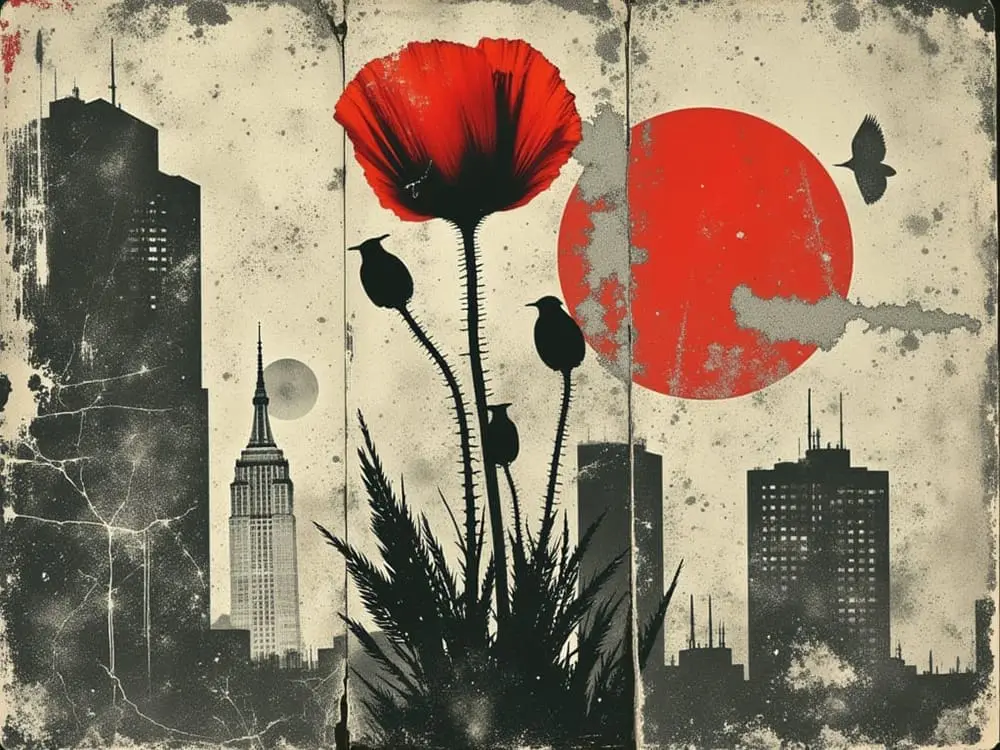
The history of conflict photography from Crimea to Syria
The history of conflict photography begins with Roger Fenton, who photographed the Crimean War in 1855. His images were technically limited by the equipment of the time, practically constrained by the impossibility of capturing action but were the first to bring warfare into the visual consciousness of the domestic public. They were also, almost immediately, contested: Fenton’s photographs avoided dead bodies and showed the British forces favourably. The question of what conflict photography chooses to show, and what it chooses not to show, has never gone away.
Matthew Brady and his team photographed the American Civil War in the 1860s with a rawness that shocked the public: their exhibition of battlefield corpses was one of the first times ordinary civilians had encountered the visual reality of industrialised killing. Robert Capa’s image of a falling soldier in the Spanish Civil War (still disputed as to whether it was staged), gave the new profession of photojournalism its defining myth: the image worth dying for.
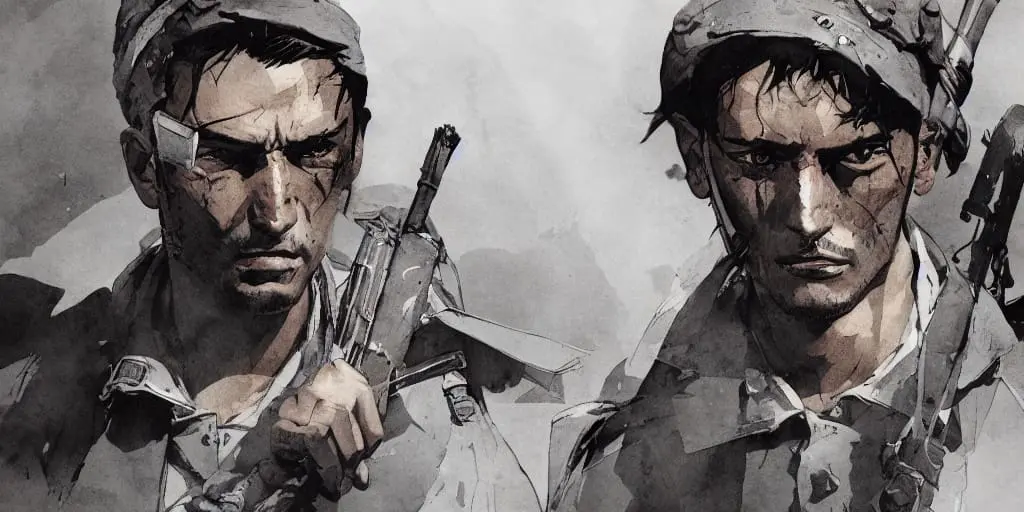
Vietnam changed everything. Nick Ut’s Napalm Girl, Eddie Adams’ execution photograph, the My Lai massacre images: these did not simply record the war. They shaped public opinion about it. They contributed to the pressure that eventually ended it. The Pentagon learned the lesson, and from the first Gulf War onwards, access to frontline action was carefully controlled through the embedding system – the arrangement by which journalists accompany military units and, by definition, see the war from inside the military perspective. The consequences of that shift are still being felt.
Peter Kennard‘s photomontages combining found images into works of devastating political clarity, represent a parallel tradition: not the eyewitness image but the constructed image, which makes visible the political realities that individual photographs, however powerful, cannot on their own convey. His work on nuclear weapons, on the Iraq War, on Palestine, has made him the most important British political artist of the past half-century.
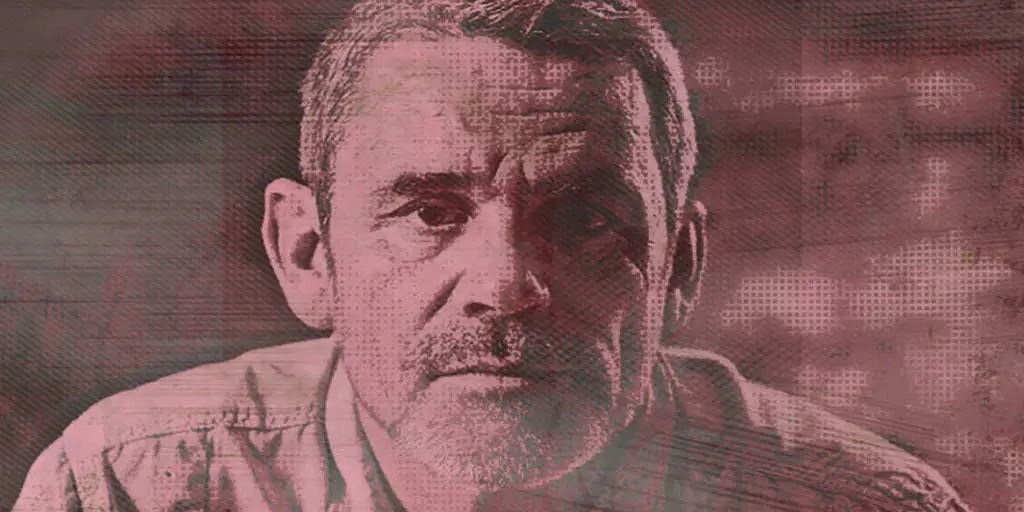
Famous war correspondents and what they risked
Paul Conroy arrived in Syria as the uprising against Bashar al-Assad was turning into a civil war. In early 2012, he was embedded outside the official embedding system, which is to say in genuine danger, with the journalist Marie Colvin in the besieged neighbourhood of Baba Amr in Homs. On 22 February 2012, the building they were sheltering in was struck by a regime rocket. Colvin was killed. Conroy was seriously wounded, and spent three weeks injured, in a city under siege attempting to escape through regime lines. He succeeded. His account of those weeks is one of the most vivid pieces of conflict testimony of the twenty-first century.
John Simpson, the BBC’s World Affairs Editor for most of his professional life, has been present at some of the most significant events of the past half-century: Tiananmen Square, the fall of the Berlin Wall, the liberation of Kabul, the Iraq War, the Arab Spring. What he brings to any conflict zone is not just presence but context and a framework of accumulated knowledge that allows him to interpret events rather than merely describe them. This is not a skill that can be substituted by satellite imagery or social media curation. It requires time, immersion and the willingness to be wrong and learn from it.

Robert Fisk spent four decades as the Middle East correspondent for The Independent, based in Beirut, and became the most celebrated and most controversial British journalist of his generation. His reporting was distinguished by a single, uncompromising commitment: to go where the story was, to speak to the people it was happening to, and to tell what he found regardless of whether it matched the version that governments preferred. His account of the Sabra and Shatila massacre in 1982, which he reached on foot while other journalists were still trying to get access, was the first eyewitness account of an atrocity that the Israeli government initially denied.
John Pilger, who died in 2023, worked across television and print for six decades with a similar commitment to the view from below: from Vietnam in the 1970s to East Timor, Cambodia, Palestine and beyond. His documentaries and his journalism consistently told stories that official sources preferred untold, stories of what powerful states, including his own, did to people who had no power to resist or to make themselves heard.
"Bearing witness is the most political act a journalist can commit"

Marie Colvin
Zarina Zabrisky, is a writer and filmmaker who has documented the war in Ukraine since 2014, represents the current generation: journalists using digital tools, direct access and sheer persistence to tell stories that official narratives would prefer suppressed. Her film documenting the bombardment of Kherson belongs to the same tradition as Fisk in Beirut: go there, see it, tell it.
Matt Kennard, who co-founded Declassified UK, works in a different mode: investigating the covert activities of the British state and its role in supporting authoritarian governments, its complicity in torture, its undisclosed relationships with foreign intelligence services. His journalism is less concerned with battlefield access than with document-based accountability – but it addresses the same fundamental question: what are powerful states actually doing, as opposed to what they say they are doing?
Truth is rarely pure and never simple
The ethics of conflict journalism – what should be published?
The ethics of conflict journalism are among the most demanding in any branch of the profession. The primary question (what to publish and what to withhold) admits of no universal answer. Every decision must be made in context, weighing the public interest in knowing against the harm that publication might cause.
The case for maximum publication rests on the premise that democratic accountability requires information, and that the suppression of uncomfortable truths, even temporarily and for apparently good reasons, serves the interests of those who prefer the truth to remain suppressed. The case for restraint rests on the reality that some information, published at the wrong time or in the wrong form, can cost lives: the location of a refugee convoy, the identity of a source, the details of a military operation that other civilians are depending on.
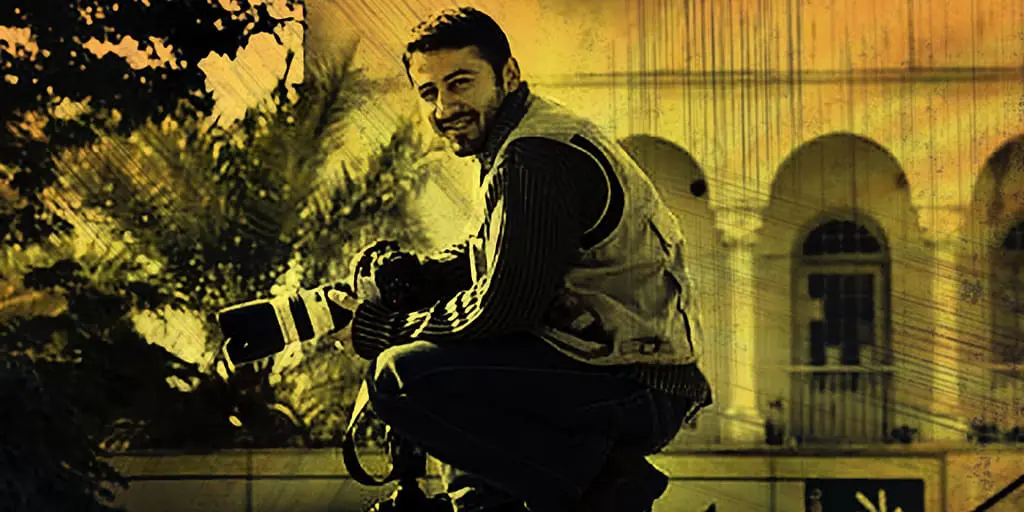
Namir Noor-Eldeen and Saeed Chmagh were both killed in Baghdad in 2007 and filmed from a US helicopter gunship in footage released by WikiLeaks as Collateral Murder illustrates the stakes. The release of the footage, which showed the killing of civilians including the two journalists, was one of the most consequential acts of conflict journalism of the twenty-first century. It was also one of the most contested. Its publication contributed to the legal case that has since consumed Julian Assange’s life.
Julian Assange‘s prosecution was a decade-plus legal battle over whether the publication of classified material by WikiLeaks constitutes journalism or espionage, raises the same questions in their sharpest form. If publishing evidence of war crimes is a crime, what does that say about the legal framework governing conflict journalism? And if it is not, (if the publication was legitimate) what does the prosecution of Assange say about the appetite of powerful states for the kind of accountability that war journalism, at its best, can provide?
More about press freedom and those who pay the price for it
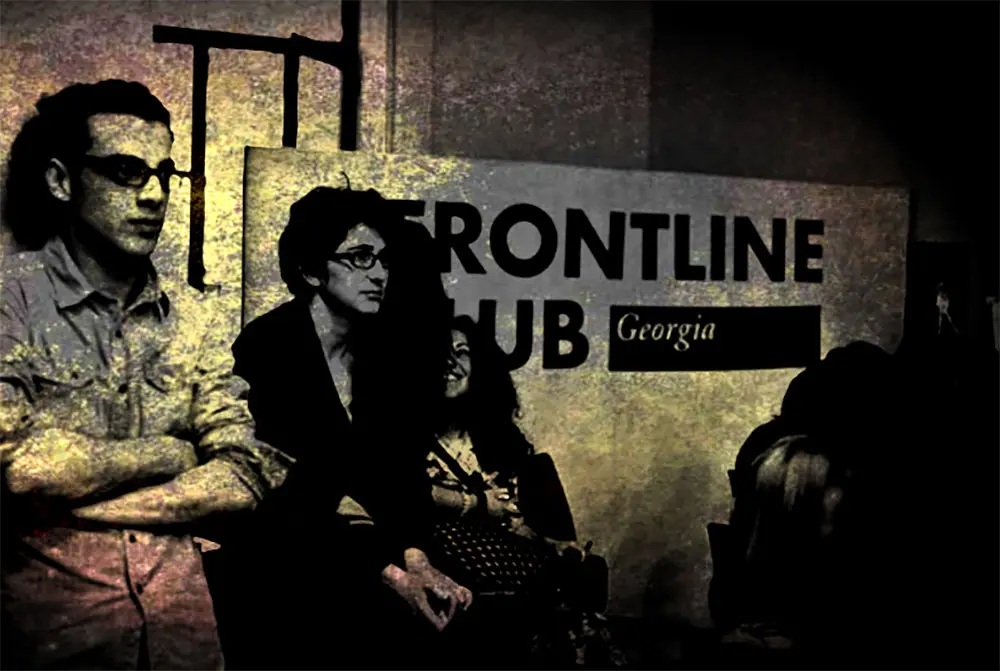
The Frontline Club and the community of war reporters
The Frontline Club in London exists because war reporters need somewhere to decompress, debrief and find solidarity with people who understand what they have been through. Founded by the television producer Vaughan Smith in 2003, it has become a significant institution in the international journalism community which hosts talks, screenings and events that address the most difficult questions the profession faces. It is also, necessarily, a place that holds the memory of those who did not come back.
The journalism community in conflict zones is a small one, and the list of journalists killed or imprisoned in the line of their work has grown steadily across the twenty-first century. Understanding this context is part of what it means to take war journalism seriously: not as a romantic adventure, but as a profession whose practitioners take risks on behalf of the rest of us, and whose protection is a matter of democratic interest.
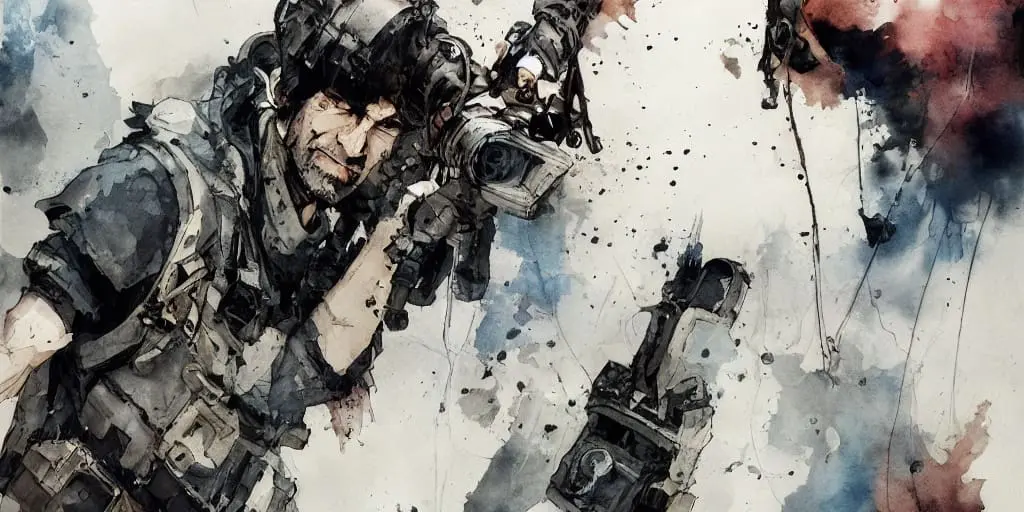
War journalism in the digital age – WikiLeaks, drones and citizen reporting
The digital revolution has transformed war journalism in ways that are still being worked out. On one side, it has democratised access to information: citizen journalists, with nothing more than a smartphone, can now document and distribute footage of atrocities in real time. The Arab Spring was shaped in part by exactly this kind of footage. So was the Russian invasion of Ukraine, where the combination of satellite imagery, drone footage and social media documentation produced an unprecedented public record of a major military conflict.
On the other side, the same technology has enabled new forms of surveillance and control. Journalists in conflict zones can now be tracked through their devices. Sources can be identified through metadata. The same social media platforms that distribute evidence of war crimes also distribute disinformation, propaganda and decontextualised footage designed to support one side or another’s narrative.
Proxy wars are conflicts in which major powers fight through local surrogates, retaining plausible deniability while pursuing strategic interests and present a particular challenge to war journalism. Our article on proxy wars traces how this dynamic has played out from the Cold War to the present day, and what it means for those trying to cover conflicts whose true architecture is deliberately concealed.
The military doctrine of Shock and Awe, applied most visibly in the 2003 invasion of Iraq, was designed in part as a media spectacle. Read our full account of Shock and Awe and the ethics of warfare that makes visual impact part of the strategic calculus.
What the digital age has not changed, and what no technological shift is likely to change, is the fundamental requirement of war journalism: that someone go there, see what is happening, and tell the truth about it. The tools change. The platforms change. The legal context changes. The essential task does not. The people who perform it deserve the rest of us to pay attention and to understand what they are risking on our behalf.
Read more full articles on Ece Temelkuran: Turkish journalist, activist and author, Gulwali Passarlay – from Afghanistan to refugee rights advocate, and Russia – From post-Soviet turmoil to global power
For more on press freedom, truth-telling and the politics of information, explore our Language, Media and Truth hub, and our profiles of Paul Conroy – war photographer and survivor of Homs and Robert Fisk – the Middle East’s most important correspondent.
The first casualty, when war comes, is truth
Pen vs Sword Books – Book Recommendations
*All Book Links Open a New tab to our Pen vs Sword Books Bookshop
**If you buy books linked to our site, we get 10% commission from Bookshop.org, whose fees support independent bookshops.
1. Under the Wire by Paul Conroy
Conroy’s first-hand account of surviving the siege of Homs – as vivid and essential as war memoir gets. PVS essential reading.
2. On Photography by Susan Sontag
Sontag’s critical analysis of photography and its relationship to reality, suffering and politics – indispensable for thinking about conflict photography.
3. The Bang Bang Club by Greg Marinovich and Joao Silva
Four photographers who documented the end of apartheid in South Africa – a vivid, morally complex account of what photojournalism demands of those who practise it.
4. The Great War and Modern Memory by Paul Fussell
The essential account of how the First World War was written about and remembered – a foundational text for understanding war journalism’s literary tradition.
5. Tell Me No Lies: Investigative Journalism and Its Triumphs by John Pilger
Pilger’s landmark anthology of the best investigative journalism of the twentieth century – a masterclass in what the profession can achieve.
6. We Wish to Inform You That Tomorrow We Will Be Killed with Our Families by Philip Gourevitch
Gourevitch’s account of the Rwandan genocide – one of the most important pieces of long-form journalism in the twentieth century. Essential reading.
7. Manufacturing Consent by Noam Chomsky and Edward Herman
The foundational political analysis of how mass media shapes and limits what counts as acceptable reporting – essential for understanding why war journalism matters.
8. All the President’s Men by Bob Woodward and Carl Bernstein The definitive account of what adversarial journalism can accomplish when directed at the most powerful institution in the world. A blueprint for the profession
JOIN THE PVS READERSHIP
Browse 4000+ Books in Our Pen vs Sword Books Bookshop
About the Author
Pen vs Sword is an independent magazine publishing long-form cultural criticism, art history and political analysis. We write about artists, movements, thinkers and ideas - from Peter Kennard to Hurufiyya, from the Suffragette movement to the French Revolution. Free to read, independently published.


Post Comment