
About the Author

Pen vs Sword is an independent magazine publishing long-form cultural criticism, art history and political analysis. We write about artists, movements, thinkers and ideas - from Peter Kennard to Hurufiyya, from the Suffragette movement to the French Revolution. Free to read, independently published.




Cryptocurrency: the Digital Frontier
What is the Future of Cryptocurrency? Evolving from a niche technological curiosity into a global financial force, what began as an experimental digital asset has blossomed into a multifaceted ecosystem influencing everything from banking and commerce to governance and geopolitics. Let’s look at the origins of cryptocurrency, its current integration into global systems, and the trajectory it’s likely to follow in the coming years.
Deep dive our article about Big Tech and Democracy – the digital corporations that now govern public life.
For more cultural criticism on Culture & Capital, including art, labour, commodification and power under capitalism, explore related Pen vs Sword articles.

“Cryptocurrency is freedom of money.”
Erik Voorhees, CEO of ShapeShift
All of our content is free to access. An independent magazine nonetheless requires investment, so if you take value from this article or any others, please consider sharing, subscribing to our mailing list or donating if you can. Your support is always gratefully received and will never be forgotten. Click here to buy us a metaphorical coffee or two.
Table of Contents
From Page to Object
This article exists as a physical thing. View in the Propaganda Department.
Binary Code Shirt | Falling Code Shirt | Pris Dress | Propaganda Department
*All Book Images Open a New tab to our Bookshop
**If you buy books linked to our site, we get 10% commission from Bookshop.org, whose fees support independent bookshops.
What Is Cryptocurrency?
At its core, cryptocurrency is a form of digital or virtual currency that uses cryptography for security. Unlike traditional currencies issued by central banks, cryptocurrencies operate on decentralised networks based on blockchain technology – a distributed ledger enforced by a network of computers (nodes). This decentralisation makes cryptocurrencies resistant to censorship and interference, appealing to users seeking privacy, autonomy, and transparency.
The most well-known cryptocurrency is Bitcoin, but thousands of others exist, each with unique features and use cases. These digital assets can be used for a variety of purposes, including online purchases, investment, remittances, and as a means of transferring value across borders without the need for intermediaries.

The Origins of Cryptocurrency
The journey to cryptocurrency began long before Bitcoin’s inception in 2009. In the 1980s, American cryptographer David Chaum introduced the concept of digital cash with his creation of eCash, a system that allowed for anonymous electronic transactions. While eCash did not achieve widespread adoption, it laid the groundwork for future developments in digital currency.
Bitcoin was introduced in 2008 by an anonymous person or group of people using the pseudonym Satoshi Nakamoto. Nakamoto’s whitepaper, titled “Bitcoin: A Peer-to-Peer Electronic Cash System,” proposed a decentralized digital currency that would allow for secure, peer-to-peer transactions without the need for a trusted third party. In January 2009, Nakamoto mined the first block of the Bitcoin blockchain, known as the “genesis block,” marking the beginning of the cryptocurrency era.
Companies such as BlackRock and Goldman Sachs are exploring blockchain-based products
– as integral components of modern financial portfolios.
Following Bitcoin’s success, numerous alternative cryptocurrencies, or “altcoins,” emerged, each aiming to improve upon Bitcoin’s design or offer new features. Ethereum, introduced in 2015 by Vitalik Buterin, brought the concept of smart contracts – self-executing contracts with the terms of the agreement directly written into code – expanding the potential applications of blockchain technology beyond simple transactions.
“Bitcoin is the most important human rights technology of the 21st century.”
Alex Gladstein, Human Rights Foundation
Cryptocurrency’s Integration into Systems Today
Cryptocurrency has moved far beyond its early days as a niche digital experiment to become a mainstream financial instrument, influencing multiple sectors. In the financial world, major institutions are increasingly embracing digital assets and blockchain technology. Companies like PayPal and Stripe now allow users to buy, sell, and hold cryptocurrencies directly through their platforms, while banks explore blockchain for faster cross-border payments and secure settlements. This institutional adoption not only validates the technology but also paves the way for wider acceptance of cryptocurrencies in everyday transactions.
The retail and e-commerce sectors have also started integrating cryptocurrency as a legitimate payment method. Luxury brands such as Ferrari and technology retailers like Newegg now accept Bitcoin, signalling a growing trend of consumer-facing adoption. By allowing customers to use digital currencies for purchases, these businesses are helping bridge the gap between traditional commerce and the digital economy, showing that cryptocurrency is not just an investment but a practical medium of exchange.

At the regulatory and structural level, governments are beginning to recognize and address the rise of cryptocurrencies. While approaches vary, countries are increasingly developing legal frameworks to govern digital assets, aiming to protect consumers while encouraging innovation. Meanwhile, the emergence of decentralized finance (DeFi) is challenging traditional banking models by offering peer-to-peer lending, borrowing, and trading services directly on blockchain networks. Platforms like Uniswap and Aave illustrate how these systems give users unprecedented control over financial activities, bypassing intermediaries and democratizing access to financial services.
The Future of Cryptocurrency
Looking forward, cryptocurrency’s trajectory suggests a profound transformation of both finance and society. Institutional adoption is poised to accelerate, as major investment firms and corporations increasingly recognize digital assets as legitimate financial instruments. Companies such as BlackRock and Goldman Sachs are exploring blockchain-based products, while backing projects like Ethereum, signalling that cryptocurrencies are gaining credibility not just as speculative investments but as integral components of modern financial portfolios.
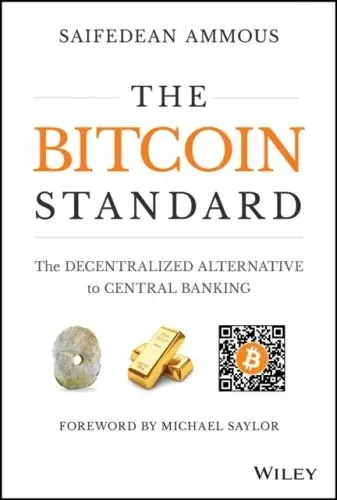
Central Bank Digital Currencies (CBDCs) are also likely to reshape the global monetary landscape. Countries such as China have already launched pilot programs for their digital Yuan, while the United States and the European Union are exploring similar initiatives. These government-backed digital currencies aim to modernize payment systems, increase financial inclusion, and provide central banks with more effective tools for implementing monetary policy. At the same time, regulatory clarity will continue to be critical, with governments seeking to balance innovation with the need to protect consumers and maintain financial stability.

Technological advancements will further define cryptocurrency’s future, addressing challenges like scalability, security, and environmental impact. Ethereum’s transition to Proof of Stake exemplifies efforts to make blockchain networks more energy-efficient, while the integration of artificial intelligence and blockchain promises more intelligent, autonomous financial systems.
Additionally, the tokenization of real-world assets, from real estate to commodities, opens new avenues for investment and global trade, allowing cryptocurrencies to serve as a bridge between traditional and digital economies. As these innovations continue, cryptocurrency is set to evolve from a digital curiosity into a foundational pillar of the future financial ecosystem.
“The best time to invest in Bitcoin was yesterday; the second-best time is today.”
Anonymous
Navigating the Digital Frontier
The digital frontier of cryptocurrency represents both opportunity and uncertainty, a landscape where traditional financial systems intersect with revolutionary technology. Just as early explorers once charted unknown territories, today’s investors, developers and policymakers are learning to navigate decentralised networks, blockchain infrastructures, and digital assets. Understanding this frontier requires more than technical knowledge – it demands a mind-set attuned to innovation, risk management, and the broader societal implications of a financial system that is borderless, instantaneous, and highly transparent.
For individuals and institutions alike, navigating this digital realm means engaging with a constantly evolving ecosystem. New technologies, protocols, and platforms emerge at a rapid pace, requiring users to stay informed and adapt. It also means learning to balance the potential for transformative gains with the inherent risks of volatility, regulatory uncertainty, and security challenges. Education and vigilance become critical tools for anyone seeking to participate meaningfully in this space.

At a broader level, the digital frontier is reshaping how we think about value, trust, and collaboration. Cryptocurrencies and blockchain networks enable peer-to-peer interactions without centralized intermediaries, giving users unprecedented autonomy. Yet, this autonomy comes with responsibility: those who navigate the frontier successfully are the ones who combine curiosity with critical thinking, technological literacy with strategic insight, and ambition with prudence. In essence, the digital frontier is not just a technological revolution – it is a test of adaptability and foresight in an age where finance, data, and innovation are inseparable.
The Threshold of a Transformative Era
Cryptocurrency stands at the threshold of a transformative era. From its humble beginnings as a decentralized digital currency to its current role in reshaping global financial systems, its journey is a testament to the power of innovation and the drive for financial autonomy. As we look to the future, the continued integration of cryptocurrency into various sectors promises to redefine how we perceive and interact with money in the digital age.
Learn about Culture & Capital for the broader context.
Read more of our Pen articles: Big Tech and Democracy – the structural context for digital currency, Beyond Capitalism – what cryptocurrency promises and what it delivers and Culture & Capital.

JOIN THE PVS READERSHIP
Browse 1000’s of Books in Our Pen vs Sword Books Bookshop
About the Author
Pen vs Sword is an independent magazine publishing long-form cultural criticism, art history and political analysis. We write about artists, movements, thinkers and ideas - from Peter Kennard to Hurufiyya, from the Suffragette movement to the French Revolution. Free to read, independently published.














Post Comment