About the Author
Pen vs Sword is an independent magazine publishing long-form cultural criticism, art history and political analysis. We write about artists, movements, thinkers and ideas - from Peter Kennard to Hurufiyya, from the Suffragette movement to the French Revolution. Free to read, independently published.




From the bread riots of 1789 to the guillotine, from the Declaration of the Rights of Man to Napoleon – the revolution that remade the modern world
On 14 July 1789, a crowd of Parisians stormed the Bastille which was a royal fortress and prison that had stood for centuries as a symbol of absolute monarchy. By the time it fell, the world it represented was already crumbling. In the months that followed, a feudal system that had governed France for a thousand years was dismantled in a single night. A king was put on trial. A queen was guillotined. The vocabulary of modern politics of liberty, equality, rights, citizenship, left and right was born.
The French Revolution of 1789 is the pivotal event of the modern world. More than any other single rupture in history, it established the terms on which political life has been conducted ever since: the idea that governments derive their authority from the people, that hereditary privilege is not a legitimate basis for power, and that the demand for equality and justice is not a luxury but a right. Every subsequent revolution, from Haiti in 1791 to Cuba in 1959 has been made in the shadow of 1789, either drawing on its language or reacting against its failures.
This article is the hub that connects Pen vs Sword’s French Revolution coverage. Read it alongside our detailed account of the Women’s March on Versailles possibly the single most dramatic event of the Revolution’s early phase and our analysis of how 1789 echoes in the present day. Together, they form a complete picture of why the Revolution happened, what it produced, and why it still matters.
Learn more about the history of activism and where the French Revolution fits in the long story.
For more writing on Resistance & Solidarity in art, culture and political struggle, read related articles across Pen vs Sword
“The voice of the people, once raised in unity, cannot be silenced.”
Maximilien Robespierre
All of our content is free to access. An independent magazine nonetheless requires investment, so if you take value from this article or any others, please consider sharing, subscribing to our mailing list or donating if you can. Your support is always gratefully received and will never be forgotten. To buy us a metaphorical coffee or two, please click this link.
Table of Contents
From Page to Object
This article exists as a physical thing. View in the Propaganda Department.
République T-shirt | Vive La Révolution Print | Vive La Résistance Print | Edition: Revolution
What caused the French Revolution? The Ancien Régime in crisis
The French Revolution did not begin on 14 July 1789. It had been building for decades in the structural contradictions of the Ancien Régime – the “old order” that governed France under absolute monarchy. Understanding those contradictions is the first step to understanding why, when the crisis came, it was so complete.
France in the 1780s was the largest and most powerful country in Western Europe, with a population of around 28 million. It was also deeply unequal. Society was divided into three Estates. The First Estate was the clergy who owned roughly ten per cent of French land and paid almost no taxes. The Second Estate, the nobility owned another quarter of the land and enjoyed extensive legal privileges, including exemption from most taxation. The Third Estate was everyone else, from wealthy merchants and lawyers to urban artisans and rural peasants who bore the overwhelming burden of taxation while being almost entirely excluded from political power.
The economic crisis that triggered the Revolution had specific causes. France had bankrupted itself supporting the American Revolution, fighting a series of costly wars against Britain, and maintaining a royal court at Versailles whose extravagance had become a byword for aristocratic excess. By 1788, the French state was effectively insolvent. A series of harvest failures in 1787 and 1788 drove the price of bread which the staple food of the majority to levels that made it unaffordable for the urban poor. In Paris, workers were spending up to ninety per cent of their wages on bread alone.
The intellectual context was equally important. The Enlightenment was the great philosophical movement of the eighteenth century, centred on reason, individual rights and the critique of arbitrary authority, had produced, in France more than anywhere, a generation of thinkers whose ideas made the existing order seem not merely unjust but irrational.
Voltaire had mocked the Church. Rousseau had developed a theory of popular sovereignty that placed all legitimate political authority in the will of the people, not the crown. Montesquieu had made the case for the separation of powers. The American Revolution of 1776 had demonstrated that these ideas were not merely theoretical: a colonial people had actually overthrown a monarchy and established a republic based on the rights of man. The French had helped them do it.
The Estates-General and the birth of the National Assembly, 1789
Faced with financial collapse, King Louis XVI took a step that would prove fatal to the monarchy: in May 1789, he convened the Estates-General, an assembly of representatives of the three Estates that had not met since 1614. He needed it to approve new taxes. What he got was a revolution.
The Third Estate arrived at Versailles with long lists of grievances known as the cahiers de doléances, notebooks of complaints compiled by communities across France and with a political consciousness sharpened by decades of Enlightenment thought and immediate economic hardship. When the Estates-General deadlocked over voting procedures the nobility wanted to vote by order, which gave the privileged estates a permanent majority; the Third Estate wanted to vote by head, which gave the majority to the people so the Third Estate took a decisive step.
On 17 June 1789, they declared themselves a National Assembly and invited the other Estates to join them. On 20 June, locked out of their meeting hall, they gathered in a nearby tennis court and swore not to disband until France had a new constitution. The Tennis Court Oath was the first revolutionary act.
Louis XVI, irresolute and poorly advised, appeared to capitulate. He instructed the other Estates to join the National Assembly. But simultaneously he began moving troops toward Paris, a move that the Parisians interpreted, correctly, as preparation for a royalist counter-revolution. On 14 July, a crowd attacked the Bastille, freed its prisoners, and killed its governor. The symbolic significance of the act far outweighed its practical consequences. The Bastille held only seven prisoners at the time. But its fall announced, to France and to the world, that the people had power and that they were prepared to use it.
“You cannot buy the revolution. You cannot make the revolution. You can only be the revolution.”
Ursula K. Le Guin
The Women’s March on Versailles – the Revolution’s decisive turning point
Of all the events of the Revolution’s early phase, none was more decisive (or more consistently underestimated) than the Women’s March on Versailles of 5 October 1789. On that morning, a group of women gathered in the markets of Paris. The bread had not arrived. What began as a local grievance over food prices grew, within hours, into a march of between 7,000 and 10,000 people heading for the royal palace twelve miles away, armed with kitchen knives, pikes and cannon.
By the following morning, the women had achieved what months of political manoeuvring in the National Assembly had not: the royal family was being escorted back to Paris, where the people could watch them. Louis XVI had signed the Declaration of the Rights of Man. The court of Versailles which had been the physical and symbolic centre of French royal power for over a century was finished. Read the full account of this extraordinary event in our article on the Women’s March on Versailles, the moment that ordinary Parisian women forced a king to act against his will and accelerated a revolution that had stalled.
“Liberty, equality, fraternity, or death – the last, much the easiest to bestow, O Guillotine!”
Charles Dickens, A Tale of Two Cities
The march matters not only as a moment in French history but as a template for popular political action. It demonstrated, with devastating clarity, that collective action by people without institutional power, working-class women, in this case, who had no right to vote and no political representation could produce immediate, material political results. It is the founding event of the tradition of popular protest that runs through the matchgirls’ strike of 1888, the suffragette movement, the civil rights marches of the 1960s, and every subsequent mobilisation that has understood that power does not give way until it has no choice.
The key events of the French Revolution – a timeline
The French Revolution is often treated as a single event, but it was in fact a decade-long process lurching, contradictory and repeatedly transformed by forces that none of its participants had anticipated or controlled. The following timeline traces the key moments:
1789: The Estates-General meets in May. The National Assembly is proclaimed in June. The Bastille falls on 14 July. The Declaration of the Rights of Man and of the Citizen is adopted in August, establishing equality before the law, freedom of speech and the press, and the principle that sovereignty belongs to the nation. The Women’s March on Versailles forces the royal family back to Paris in October.
1790–1791: The National Assembly restructures France root and branch. Feudalism is abolished. Church property is nationalised. France is reorganised into departments. The Civil Constitution of the Clergy subordinates the Church to the state. A constitutional monarchy is established, though Louis XVI accepts it only under duress.
1791–1792: Louis XVI attempts to flee France in June 1791 – the Flight to Varennes – and is captured and brought back to Paris, destroying any remaining trust in the monarchy. War breaks out with Austria and Prussia in April 1792, as the crowned heads of Europe mobilise against the revolutionary government. In August 1792, the Tuileries Palace is stormed, the monarchy suspended, and Louis XVI imprisoned.
1792–1794: The First French Republic is proclaimed in September 1792. Louis XVI is tried for treason and executed by guillotine on 21 January 1793. Marie Antoinette follows him to the guillotine in October 1793. The Revolution enters its most radical phase: the Reign of Terror. Between September 1793 and July 1794, the Committee of Public Safety, dominated by Maximilien Robespierre, oversees the execution of approximately 17,000 people as enemies of the Revolution. The Terror ends with Robespierre’s own execution, the so-called Thermidorian Reaction in July 1794.
1795–1799: The more conservative Directory governs France through a period of military expansion and political instability. Napoleon Bonaparte, whose military genius has made him the Republic’s most celebrated general, seizes power in the coup of 18 Brumaire in November 1799. The Revolution is over. The modern world is beginning.
*Youtube Video Taken From the Promises Project Film ‘Loved by Ghosts‘
“The secret of freedom lies in educating people, whereas the secret of tyranny is in keeping them ignorant.”
Maximilien Robespierre
The Declaration of the Rights of Man – what it promised and what it withheld
Adopted by the National Assembly on 26 August 1789, the Declaration of the Rights of Man and of the Citizen is one of the most important documents in the history of political thought. Its seventeen articles established principles that have shaped constitutional law across the world for two and a half centuries: the equality of all citizens before the law, freedom of opinion, speech and the press, the presumption of innocence, the right to resist oppression, and the principle that all sovereignty resides in the nation.
But the Declaration’s promises were selective. “All men are born and remain free and equal in rights,” its first article declared. The word “men” was not accidental. Women were explicitly excluded from political rights, a fact that Olympe de Gouges addressed directly in her Declaration of the Rights of Woman and of the Female Citizen of 1791, which demanded that women be granted the same rights as men and which earned her the guillotine in 1793. The enslaved people of France’s Caribbean colonies (particularly Saint-Domingue), which produced most of France’s colonial wealth were also excluded from the Declaration’s promises, a contradiction that the Haitian Revolution of 1791–1804 would force the world to confront.
The gap between the Declaration’s universal claims and its selective application is not a failure of the Enlightenment so much as its most revealing feature: it shows that the language of universal rights was born in the same moment as the political struggle over who would be included in that universality. That struggle has not ended. Every subsequent liberation movement, for the rights of women, of enslaved and colonised people, of workers and of LGBTQ+ communities has made its case in the language that the French Revolution established, while challenging the boundaries that the French Revolution drew.
The Reign of Terror – revolution that devoured its children
The Reign of Terror remains the most disturbing episode of the French Revolution, and the one most frequently invoked by those who are sceptical of radical political change. Between September 1793 and July 1794, the revolutionary government executed approximately 17,000 people by guillotine and a further 25,000 by other means, in a campaign to eliminate enemies of the Republic both real and imagined. The victims included not only aristocrats and clergy but thousands of ordinary people, and eventually the Revolution’s own leaders.
The Terror had real causes, which its critics often ignore. France was simultaneously at war with most of Europe, facing royalist counter-revolution in the Vendée region, under economic siege, and subject to genuine conspiracies by those who wanted to restore the old order. The Committee of Public Safety’s response was brutal, but it was a response to a genuine existential threat to the Republic.
Robespierre himself understood the Terror’s internal logic. “Terror without virtue is murderous,” he told the Convention, “virtue without terror is powerless.” The equation of revolutionary purity with the willingness to execute those who deviated from it created a self-consuming machine: as the definition of “enemy of the Republic” expanded, no one was safe, including Robespierre himself, who was arrested and guillotined on 9 Thermidor Year II on the 27th July 1794. The revolutionary maxim that the revolution devours its own children is not merely a dramatic figure of speech. It is a description of what actually happened.
The Terror has been used ever since by conservatives as evidence that radical political change inevitably produces tyranny. This reading ignores both the specific historical conditions that produced it and the Terror’s own internal contradictions, the way in which it was stopped, not by external force, but by the very revolutionary mechanisms it had created. The guillotine was also used, in the end, on those who had built it.
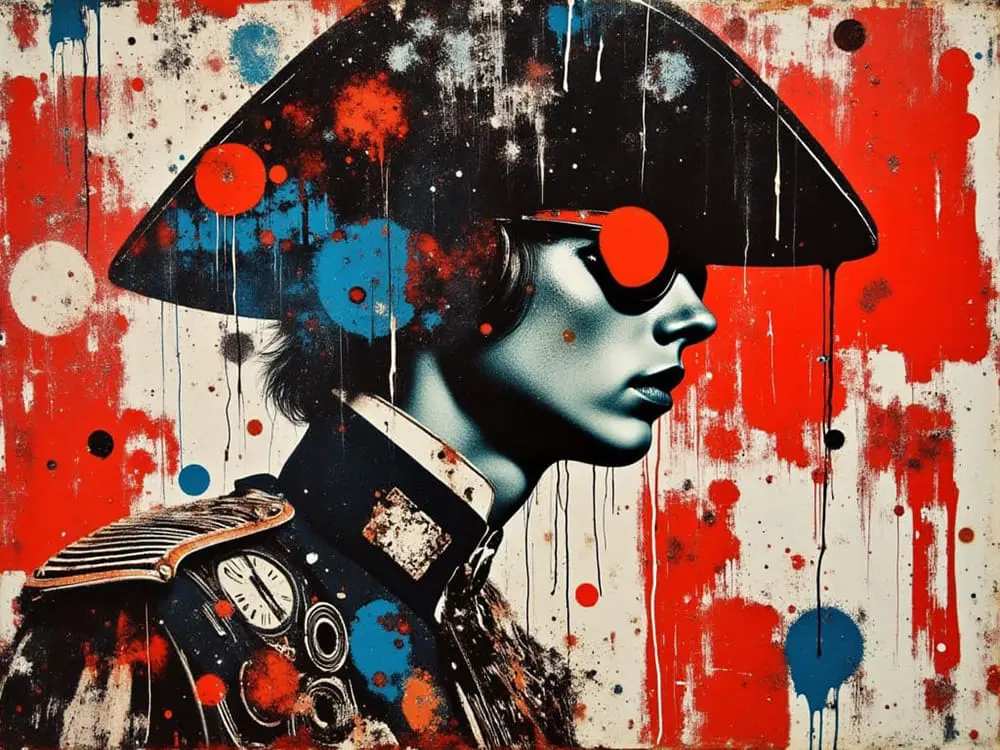
“The Revolution is like Saturn – it devours its own children.”
Jacques Mallet du Pan, 1793
Napoleon Bonaparte – revolution’s heir and revolution’s betrayal
Napoleon Bonaparte’s rise is the final act of the French Revolution and the most ambiguous. He was made by the Revolution: a Corsican officer of minor noble family who would never have risen to prominence under the Ancien Régime, who found in the Revolutionary armies a meritocratic system that rewarded ability over birth, and who transformed those armies’ revolutionary energy into the most spectacular military career in European history.
He also, in important respects, ended the Revolution. His coup of 1799 replaced the Republic’s democratic institutions with his own authoritarian rule. He reintroduced a form of aristocracy. He reinstated slavery in the Caribbean colonies (though he failed to suppress the Haitian Revolution that had abolished it). He made himself Emperor in 1804, with a ceremony that gave the lie to the Republic’s founding principles.
But Napoleon also preserved and spread the Revolution’s most durable legacy: the Napoleonic Code of 1804, which enshrined equality before the law, property rights, and religious toleration, was imposed across the territories he conquered and remains the basis of legal systems across Europe, Latin America and beyond. The abolition of feudalism, the principle of meritocracy, the secular state: all of these were carried across the continent by Napoleon’s armies, even as he betrayed the political freedoms the Revolution had proclaimed.
“You cannot make a revolution with silk gloves.”
Joseph Stalin
The French Revolution’s impact – a world remade
The French Revolution’s impact on the modern world is difficult to overstate. Most directly, it ended the feudal system in France and, through the Napoleonic conquests, across much of Europe. Serfdom, the tithe, the sale of offices, the privileges of birth: all of these survived the Revolution’s beginning but not its completion. The political vocabulary it established, left and right (derived from seating arrangements in the National Assembly), citizen, republic, nation, terror all remains the vocabulary of politics today.
More fundamentally, the Revolution established a new basis for political legitimacy. Before 1789, most European states justified their authority through divine right, hereditary privilege, and the weight of tradition. After 1789, every government had to contend with the alternative principle that the people were the source of political authority and that rulers who failed to serve the people’s interests could be removed — by ballot or, if necessary, by force. This is the principle that has driven every democratic revolution since, and that every authoritarian regime since has had to suppress.
The Revolution’s global impact was equally significant. The Haitian Revolution, which began in 1791 and produced the world’s first Black republic in 1804, was made in the language of the French Declaration of Rights — demanding that France actually apply its own principles to its enslaved population. The revolutions that swept Latin America in the early nineteenth century drew explicitly on the French model.
The revolutionary tradition that the French Revolution founded runs directly through the thought of Marx, the practice of Lenin, the ideology of Che Guevara, and the liberation movements of the twentieth century. When Guevara wrote about revolution, he was writing in a tradition that 1789 had created. When Angela Davis argued for Black liberation, she was arguing for the extension of the Declaration of Rights to those it had always excluded. The French Revolution is not a finished event. It is an ongoing argument about who is included in the phrase “the rights of man.”
“Those who make peaceful revolution impossible will make violent revolution inevitable.”
John F. Kennedy
“Bliss was it in that dawn to be alive, but to be young was very heaven.”
William Wordsworth, on the French Revolution
The French Revolution’s legacy today – why 1789 still echoes
The question of what the French Revolution means today is not merely academic. The specific tensions it identified between liberty and equality, between popular sovereignty and minority rights, between revolutionary necessity and legal constraint, between the demand for justice and the violence that demand can produce are the tensions of every political argument happening right now.
Our analysis of how 1789 echoes in the present traces the specific parallels between the conditions that produced the French Revolution and the conditions of the contemporary world: the concentration of wealth in a small elite, the fiscal crisis of the state, the delegitimisation of existing political institutions, the rise of popular movements that the established order cannot contain.
The tradition of popular protest that the French Revolution founded runs through every article in our Resistance and Solidarity hub. The women who marched on Versailles are the direct ancestors of the suffragettes who marched on Parliament, the civil rights demonstrators who marched on Washington, and the climate activists who march on government buildings today. The language they use of rights, dignity, justice and the sovereignty of the people is the language that 1789 put into the world.
The French Revolution also established the template for the difficult question that every liberation movement must answer: what happens when the revolution achieves power? The Terror’s answer (that revolutionary purity justifies any means), is one that has been repeated, with catastrophic consequences, across the twentieth century. The alternative, that means and ends cannot be separated, that a revolution that abandons its principles in the name of defending them has already failed, is harder to maintain but more durable in its effects. This is the argument that runs through our account of women in history and the specific courage of those who have fought for liberation without becoming what they were fighting against.
1789 is not finished. It is, in an important sense, not even history. It is the foundation on which the argument about what human life should be is still being conducted and the record of what human beings are capable of, for good and for ill, when they decide that the world as it is is not the world as it must be.
Learn more from our full articles on the revolutionary tradition that 1789 founded and Revolution and civil war – how upheaval reshapes history
Read more of our Sword articles: the Women’s March on Versailles – the Revolution’s decisive turning point, how 1789 echoes in the present and Angela Davis and the liberation movements the Revolution inspired.
Pen vs Sword Books – Book Recommendations
*All Book Links Open a New tab to our Pen vs Sword Books Bookshop
**If you buy books linked to our site, we get 10% commission from Bookshop.org, whose fees support independent bookshops.
1. Citizens: A Chronicle of the French Revolution by Simon Schama
The most vivid and readable single-volume history of the Revolution – Schama brings the period to life with extraordinary narrative skill and rigorous historical analysis.
2. The Oxford History of the French Revolution by William Doyle
The definitive scholarly account – comprehensive, authoritative and essential for anyone who wants to understand the Revolution in depth.
3. A Place of Greater Safety by Hilary Mantel
Mantel’s extraordinary novel about Robespierre, Danton and Desmoulins is the finest literary account of the Revolution’s human dimensions ever written. A masterwork.
4. The French Revolution: A Very Short Introduction by William Doyle
The best short introduction to the Revolution – clear, balanced and authoritative. The ideal starting point for anyone new to the subject.
5. Liberty or Death: The French Revolution by Peter McPhee
McPhee’s account focuses on the social history of the Revolution – on the lives of ordinary people rather than political leaders — and is essential for understanding what the Revolution actually meant to those who lived through it.
6. The Social Contract by Jean-Jacques Rousseau
The philosophical foundation of the Revolution’s political theory – Rousseau’s account of popular sovereignty and the general will shaped how the revolutionaries understood what they were doing.
7. A Tale of Two Cities by Charles Dickens
Dickens’s great novel of the Revolution is not history, but it captures the emotional reality of what it meant to live through the Terror with a power that no strictly historical account matches.
“Every revolution evaporates and leaves behind only the slime of a new bureaucracy.”
Franz Kafka
JOIN THE PVS READERSHIP
Browse 1000’s more Books in Our Pen vs Sword Books Bookshop
About the Author
Pen vs Sword is an independent magazine publishing long-form cultural criticism, art history and political analysis. We write about artists, movements, thinkers and ideas - from Peter Kennard to Hurufiyya, from the Suffragette movement to the French Revolution. Free to read, independently published.





Post Comment